
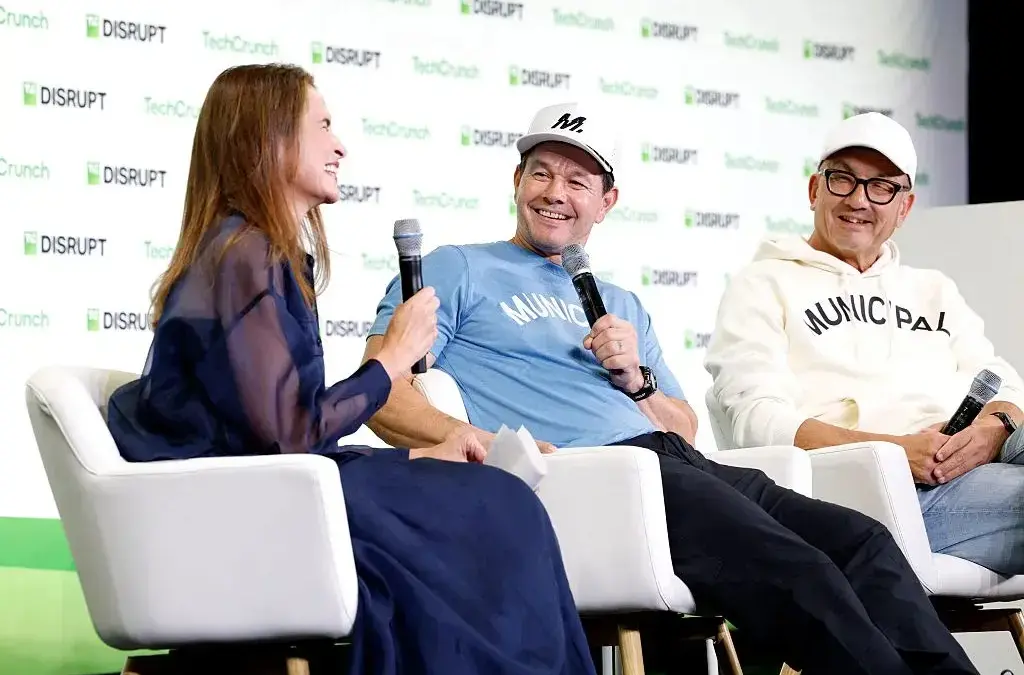
Mark Wahlberg has launched companies of his own and backed plenty of others throughout his extensive career in Hollywood and business. However, the multi-hyphenate star says the gym he is opening in December has him more energized than anything else he has done in his entire professional life. The venture also steers him directly into a lucrative corner of the market where venture capital continues to flow heavily: pricey, diagnostics-heavy wellness and longevity clubs.
Speaking during an appearance at TechCrunch Disrupt in San Francisco, the actor revealed that the very first Municipal Gym is scheduled to open its doors in December. Spanning 32,000 square feet just outside Las Vegas, the expansive club is designed to be a comprehensive wellness destination. It will feature blood work analysis, epigenetic testing, cutting-edge recovery gear, compression therapy, cold plunges, and an on-site café serving health-conscious items like protein muffins. Wahlberg is positioning the facility as an accessible, affordable alternative to the exclusive longevity clubs that currently charge wealthy clients tens of thousands of dollars a year for similar services.
This ambitious launch represents the second phase of a broader business strategy that initially took shape seven years ago with the creation of a casual sportswear line.
The clothing brand Municipal officially launched during the COVID-19 pandemic, a timing that Wahlberg freely admitted was far from ideal. Entering the apparel market in 2020 proved to be a difficult undertaking, as widespread retail disruptions forced historic names ranging from J.Crew to Brooks Brothers to file for Chapter 11 bankruptcy.
The concept for the brand grew out of experiences Wahlberg had accumulated while working as a celebrity fitness spokesperson. Over the years, he had participated in numerous collaborations with various brands, and companies frequently approached him to act as a brand ambassador. Yet, he noticed a recurring pattern in these offers. According to the actor, everyone essentially wanted the exact same thing: to sell T-shirts and sneakers. Wahlberg explained that he wanted to have a much broader and more meaningful impact on people’s daily lives as a whole.
By that, he meant influencing what people eat, what supplements they take, how they structure their training routines, and how they approach physical recovery. Clothing was simply the initial building block. He noted that they figured they would start in the apparel space and build outward from there. He maintains a philosophy of only taking professional swings at things he feels deeply passionate about and things that serve as a direct extension of his personal identity.
Even under normal economic circumstances, the apparel industry is notoriously challenging, a reality underscored by frequent quality-control hurdles seen across major brands like Lululemon. Nevertheless, Wahlberg remained unfazed by these industry pitfalls, pivoting the conversation toward how the new gym fits seamlessly into his overarching vision. He believed that establishing a physical fitness center could always be great for the brand, in part because it provides consumers with a brick-and-mortar space to physically feel and touch the clothing before making a purchase. Furthermore, he noted that how people exercise remains another fundamental pillar of everyday life.
While the broader wellness industry has remained laser-focused on the ultra-high-end tier of the market, Wahlberg sees a major opportunity in democratizing access. Companies like Fountain Life, the longevity firm co-founded by Tony Robbins, raised $18 million to expand its specialized centers catering to wealthy clients, where full annual subscriptions cost upward of $21,500. Similarly, The Estate, another venture co-founded by Robbins and hospitality executive Sam Nazarian, has outlined plans to charge $35,000 for memberships to its wellness properties. Meanwhile, Equinox has built a substantial waitlist for a $36,000 longevity add-on package designed to sit on top of a traditional gym membership.
Wahlberg asserts that Municipal aims for that exact same luxury tier of service, but at a fraction of the cost. He stated that they offer a better price point than their competitors while aiming to deliver far greater results. By way of example, he explained that members would receive comprehensive services, such as three rounds of blood work and an hour-long consultation with a physician to identify potential health predispositions, for a price point as low as $99. Additional offerings like supplements and hormone therapy will also be readily accessible on-site.
When asked whether the new gyms would double as physical storefronts for his other business ventures, such as his personal protein and supplement brand, he replied that it would "kind of" function that way. What he is truly constructing, he emphasized, is a complete health and wellness ecosystem that provides everything a member needs from start to finish.
While he declined to specify a definitive numerical target for how many gyms he ultimately hopes to open, he described the overarching growth strategy as aggressive. He noted that real estate developers and landlords who toured the Las Vegas site have already stepped forward with offers for top-tier locations under highly favorable terms, including substantial tenant-improvement allowances designed to assist with the build-out costs.
Wahlberg’s previous high-profile venture into the fitness industry might have made other entrepreneurs hesitant to try again. During the discussion, it was noted that a recent viewing of his reality television series, Wahl Street, captured him getting deeply involved with the global fitness franchise F45 back in 2019. Responding with characteristic humor, he joked about knowing the pandemic was coming. He had bought into the company—known for its intense 45-minute group workouts—at a valuation of $450 million. The company eventually went public in 2021, but its stock price subsequently collapsed, leading to its delisting from the New York Stock Exchange in 2023. Wahlberg acknowledged that he learned valuable lessons from the challenging experience.
Reflecting on the venture, he shared that his biggest takeaway was ensuring he surrounds himself with people who share his exact approach and vision. He also noted that he ultimately concluded the traditional big-box gym model was superior. While F45 classes cater well to individuals who are short on time, Wahlberg envisions members spending hours at Municipal facilities rather than just dropping in for a quick session. Remarking on the common industry practice where gyms rely on a business model of signing up members who rarely show up, he stated that he simply cannot understand that philosophy.
The name Municipal holds deep personal significance for Wahlberg, who grew up poor in Boston as one of nine children, spending his youth playing sports on public basketball courts and golf courses. He remarked that you learn a great deal playing on the blacktop, including how to win, how to lose, how to compete, and hopefully how to dust yourself off and try again.
Wahlberg has never concealed the difficulties of his youth, which included a troubled adolescence that led to a two-year sentence for assaults as a teenager, of which he served 45 days. Earlier in the afternoon backstage at Disrupt, surrounded by longtime friends and business associates—echoing the lifestyle that inspired the hit television series Entourage—he credited specific figures with turning his life around. Among them was Father Jim Flavin, a parish priest in the Boston area who has remained a guiding presence in Wahlberg’s life since he was 13 years old.
He hopes the new gyms will embody that same supportive spirit and communal atmosphere. Describing the environment he wants to create, he said it should be a place to work hard, have fun, support one another, build a genuine community, and challenge people to become better versions of themselves. He acknowledged that the mission is deeply personal to him. Having risen from next to nothing to his current position of success, Wahlberg stated that he constantly reminds himself of the potential to inspire others growing up in similar circumstances, particularly inner-city kids and at-risk youth, proving that it is possible to overcome difficult backgrounds through hard work.
Now 55 years old, Wahlberg noted that his personal goals have shifted significantly over time. While he was once primarily focused on looking good for his roles and public appearances, his primary motivation today is simply feeling good when he wakes up in the morning and having the vitality to conquer all the objectives he has planned for his day.
Balancing his professional life remains a juggling act, as his current plate is exceedingly full between overseeing the gym launch, preparing for an upcoming film role portraying Pete Rose, and supporting his daughter’s competitive equestrian career. He is so eager for the Las Vegas gym to officially open its doors that visiting the active construction site feels like watching paint dry. When asked if he is actively scouting additional new ventures, he offered a shrug, confirming that he is certainly not out hunting for the next big thing. However, he quickly added that if something truly remarkable were to cross his path, he naturally would not turn it down.



Leave a Reply