
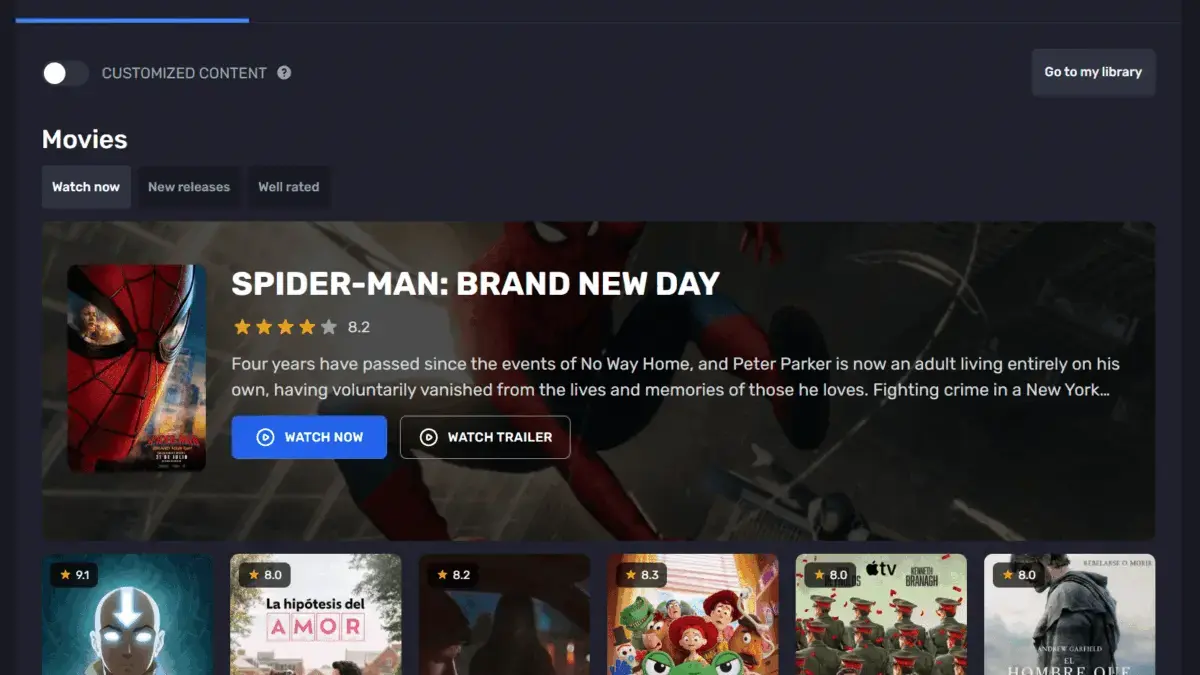
Few digital properties in the history of Spanish online piracy carry the complex legacy of Series.ly. Once celebrated and simultaneously reviled as one of the nation’s most prominent link-sharing directories, the platform became a focal point for copyright enforcement before its original operators dismantled its infringing features in late 2014. That historic chapter seemed firmly closed, overshadowed by years of legal battles that eventually saw the original administrators acquitted. However, the domain name itself—carrying immense historical weight and organic traffic potential—remained a valuable asset in the digital ecosystem.
In 2021, a completely new team of developers purchased the Series.ly domain at public auction. According to the current operators, this fresh iteration shares no structural, financial, or personal ties to the individuals who managed the original platform a decade prior. Under new stewardship, the revived Series.ly carved out a distinct niche for itself. Requiring users to log in before navigating its features, the site quickly climbed back into the public eye. Within a relatively short span, it attracted nearly two million visits every month, with an overwhelming 90 percent of its user base originating directly from Spain.
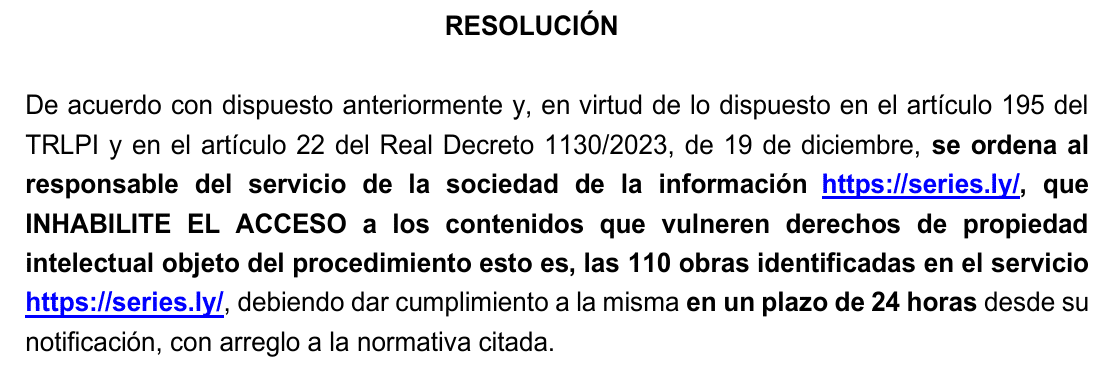
Such rapid and concentrated popularity inevitably drew the attention of major rightsholders and anti-piracy organizations, who remained vigilant against the return of a historically problematic brand. The tipping point arrived in May, when EGEDA, the prominent Spanish audiovisual producers’ rights management organization, formally filed a copyright infringement complaint. The target was the Second Section of Spain’s Intellectual Property Commission, a specialized administrative body operating under the umbrella of the Ministry of Culture, which holds the administrative authority to fast-track site-blocking measures against persistent copyright infringers.
Upon receiving the complaint, an investigator appointed by the Commission initiated a standard review process, examining a randomized sample of 42 titles pulled from a broader list of 110 allegedly infringing works cited in EGEDA’s filing. The findings of the investigation were definitive: of the 42 sampled titles, 35 were readily accessible for streaming or direct downloading directly through the Series.ly platform. Armed with this evidence, the Commission issued a formal administrative notice in July, instructing the site operators to voluntarily remove the infringing materials. According to regulatory records, Series.ly never formally acknowledged or responded to the removal directive.

From Google to a Libyan Registrar
With the administrative warning ignored, the Commission escalated the matter at the end of July by sanctioning a comprehensive package of multi-layered anti-piracy measures designed to choke off the site’s operational infrastructure and visibility. Rather than targeting only the site operators, the resolution cast a wide net across third-party intermediaries, demanding cooperation from major search engines, domain registries, hosting providers, and telecommunication networks.
Under the terms of the resolution, tech giants Google and Bing were explicitly ordered to scrub the Series.ly domain from their search indices, rendering the site invisible to casual searchers. Simultaneously, Spanish Internet Service Providers (ISPs) commanding a market share greater than one percent were mandated to implement DNS and IP-level blocks against the domain. These domestic network operators were further instructed to redirect any unsuspecting users attempting to reach the site toward an official government landing page. This state-hosted notification explicitly informs visitors that the domain has been blocked by the Commission because it illegally facilitated access to content protected by intellectual property laws.
The administrative reach of the order did not stop at Spain’s borders. The resolution formally listed several critical international infrastructure providers, including content delivery giant Cloudflare and Ukrainian hosting provider Virtual Systems—whose primary data centers in Kyiv had coincidentally been impacted by Russian missile strikes the previous month. Also squarely in the crosshairs was Series.ly’s domain registrar, the Libyan Spider Network. Crucially, the regulatory framework stipulated that these sweeping defensive and punitive measures would apply not only to the active domain name at the time of the ruling, but also to any alternate domains the operators might subsequently adopt to circumvent the blockade.
Because administrative commissions in Spain cannot unilaterally enforce extraterritorial or sweeping structural blocks without judicial oversight, the resolution required formal court approval. That judicial green light arrived on September 28, when a judge presiding over the Central Court of First Instance in Madrid reviewed the regulatory file. The court concluded that the proposed measures were entirely necessary, balanced, and proportionate to the scale of the infringement, officially authorizing the enforcement of the Commission’s resolution as requested.

The Libyan Registrar Acts and the Aftermath
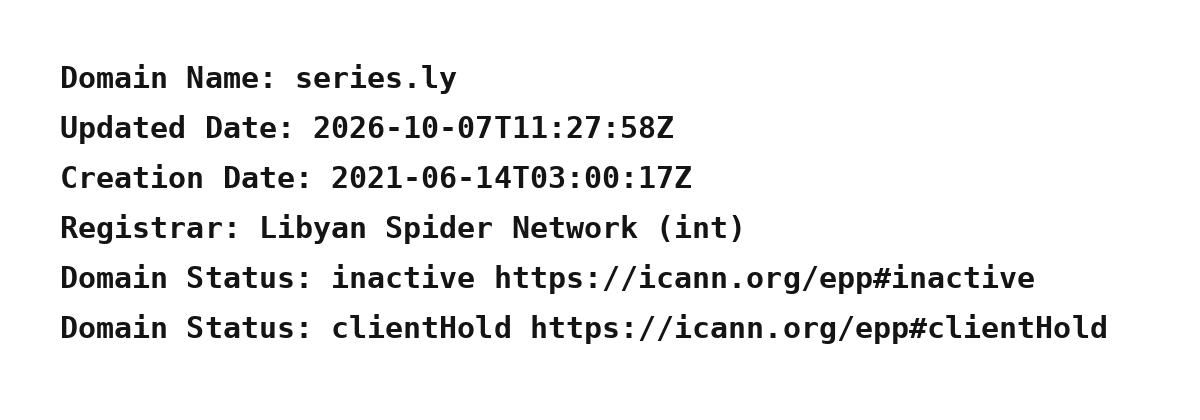
The judicial validation provided the necessary legal catalyst for international intermediaries to begin complying with the Spanish order. Just over a week after the Madrid court handed down its decision, the first major structural casualty materialized. Series.ly abruptly lost active resolution of its domain name when its registrar, Libyan Spider, intervened directly.
Public WHOIS registry records confirmed that the series.ly domain had been placed into a "clientHold" status. This specific administrative flag is controlled exclusively by the domain registrar to effectively take a website offline by halting its publication in the global Domain Name System (DNS) zone files. Consequently, the domain stopped resolving entirely, severing visitors’ access to the platform.
While Libyan Spider elected not to issue a public statement explaining the technical intervention, the operators of Series.ly reported receiving direct notification of the action. The notice reached them through the third-party auction house that had originally sold them the domain, which routinely functions as a localized reseller and liaison for the registrar. According to the site’s operators, the justification provided was unmistakable: a formal Spanish copyright resolution paired with a judicial court order authorizing broad suspension measures against the domain.
It remained unclear whether other designated intermediaries, such as domestic ISPs and search engines, had fully synchronized their blocking protocols at that exact juncture, but the underlying judicial decree remained fully valid and enforceable. Interestingly, the disruption of the flagship domain triggered immediate tactical maneuvers. Shortly after Series.ly went dark, a structurally similar alternative platform operating under the "Cinubo" brand emerged online. Simultaneously, the community management channels associated with Series.ly—including its official Telegram and Discord servers—were rapidly rebranded to reflect the new Cinubo identity.
No Plans to Appeal
As the dust settled around the sudden domain suspension, the operators of Series.ly spoke out regarding the administrative process and their lack of formal communication with the authorities. They explained that they had failed to notice the initial regulatory warnings prior to the domain seizure because the communications from rightsholders had been routed to an obscure or unmonitored inbox. Specifically, an email sent by EGEDA had been directed to an administrative address format associated with the domain’s backend, whereas the contact address publicly displayed on the site for user inquiries differed entirely.
Defending the operational philosophy of the platform, the operator maintained that Series.ly functioned strictly as a non-profit endeavor that had failed to generate any direct commercial revenue since its 2021 relaunch. Furthermore, they emphasized that the site never hosted a single video file on its own servers; instead, any links directing users toward external streaming and file-sharing services were contributed entirely by the active community membership.
"Our position is that complaints about those video files should be directed at the services that host or distribute them," the operator noted in statements translated from Spanish. "We think it’s disproportionate that a complaint about content hosted by third parties ends up getting our entire domain suspended, including email and the personal library features."
Reflecting on their legal options, the operator initially confirmed there were no active plans to launch a formal appeal against the Spanish administrative order. They highlighted a key jurisdictional hurdle, noting that the corporate entity behind the renewed project is legally based in the island nation of Nevis. This corporate structure, they argued, cast serious doubt on the legitimate global reach of a domestic Spanish administrative ruling.
"We question whether a procedure handled in Spain justifies suspending our domain worldwide, which also affects email and services that have nothing to do with the works in question," the operator added.
Despite these jurisdictional arguments, the legal pressure from Spanish authorities remained a formidable obstacle. Because the original court-backed resolution explicitly covered any subsequent domains deployed for identical infringing purposes, the newly introduced Cinubo brand faced an immediate threat of facing the exact same regulatory scrutiny and intermediary blockades.
The narrative surrounding the domain took yet another unexpected turn shortly thereafter. Just a few days following the initial enforcement action, the series.ly domain unexpectedly reverted to the control of its registered owner. The operator confirmed that the registrar ultimately lifted the domain suspension, though this reprieve came with a strict caveat: the domain could no longer be utilized to host or link to copyright-infringing material.
Rather than resuming its former role as a media directory, the restored Series.ly transformed its public-facing presence entirely. The platform shifted away from any form of streaming portal, replacing it with an archival webpage dedicated to documenting the complex history of the domain itself.
Leave a Reply