
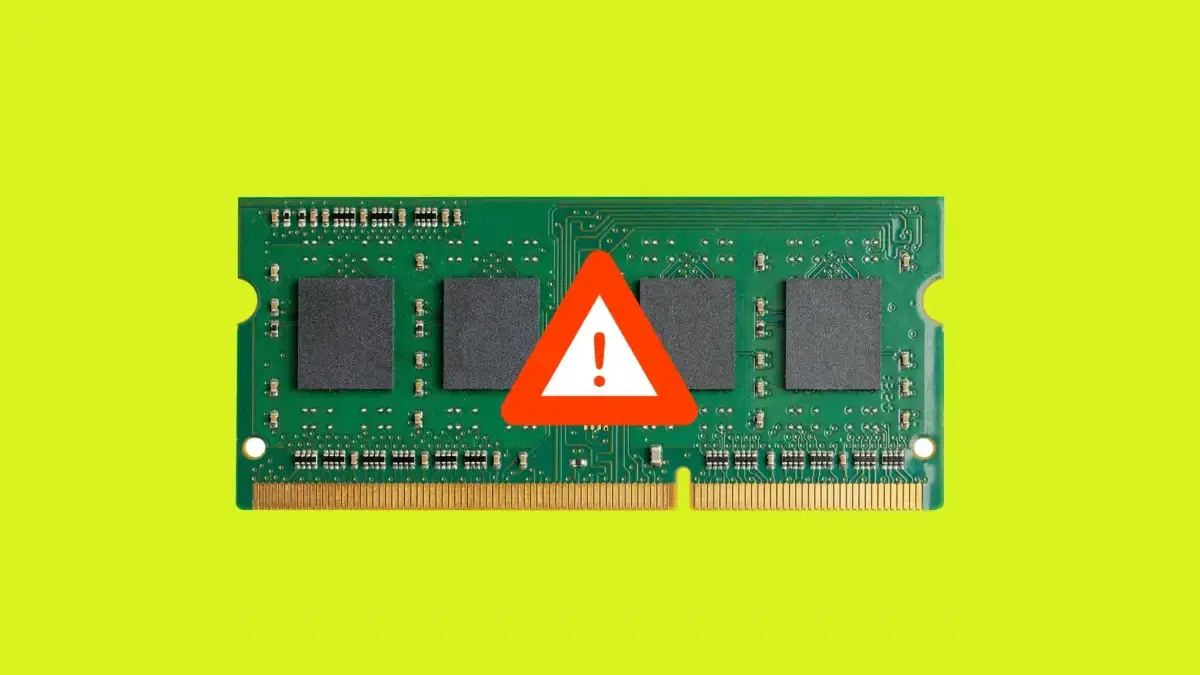
Central processing unit manufacturers have increasingly noticed that the seemingly unending RAM price hikes are making it extraordinarily tough for a large portion of the consumer base to upgrade their personal computers. Facing a sluggish market where consumers are increasingly hesitant to purchase high-end components due to ballooning subsidiary costs, chipmakers have devised a pragmatic, if unusual, solution: a strategic return to last-generation DDR4 RAM. Both major industry giants, Intel and AMD, are actively engineering and preparing to release new processors that will support this older, significantly more affordable type of memory, defying the traditional trajectory of generational tech advancement.
The latest indicator of this shifting industry tide emerged on Friday, when hardware manufacturer Gigabyte officially announced that two of its prominent motherboard lines will soon offer robust support for upcoming processors built on Intel’s aging LGA 1700 socket architecture. That particular socket originally debuted back in 2021 alongside the rollout of Intel’s 12th-generation Alder Lake CPUs, a launch that famously introduced a hybrid core architecture and support for both DDR4 RAM and the then-brand-new, highly anticipated DDR5 memory standard.
While Intel subsequently phased out cross-format compatibility in favor of a strictly DDR5-only approach by 2024, the hardware landscape has shifted drastically since then. According to Gigabyte’s recent product roadmap disclosures, this dual-format support is now being officially revived, with new LGA 1700-compatible chips expected to launch in early 2027. When approached for comment regarding this unexpected product strategy reversal, Intel did not immediately respond to requests, leaving motherboard vendors and industry analysts to interpret the broader market signals.
This notable backtrack fundamentally stems from the LGA 1700 platform’s inherent cross-compatibility with both legacy and modern types of RAM—a versatile hardware architecture advantage over its successor that has recently become immensely more important to budget-conscious builders. Intel’s overarching market strategy appears to be offering consumers the practical choice of purchasing a genuinely new CPU without forcing them to simultaneously absorb the steep financial burden of migrating to expensive new DDR5 memory kits.
Intriguingly, rival chipmaker AMD is actively pursuing a remarkably similar playbook to capture the value-driven segment of the PC building community. In August, Gigabyte also announced an entirely new series of motherboards specifically designed for AMD’s last-generation, DDR4-compatible AM4 platform, a move timed to coincide with the milestone 10th-anniversary relaunch of the beloved Ryzen 7 5800X3D CPU. By breathing new life into platforms that many analysts assumed were permanently headed toward obsolescence, both Intel and AMD are demonstrating an unusual level of adaptability in the face of ongoing supply chain pressures.
To understand why this backward-looking strategy is suddenly necessary, one only has to look at the historical timeline and current economics of computer memory. DDR4 memory technology first began hitting the consumer market way back in 2014, and in the intervening decade, it has naturally been succeeded by the much faster, higher-bandwidth DDR5 standard. Under normal, predictable market circumstances, purchasing brand-new hardware to utilize memory technology that is over a decade old would universally be considered a poor financial investment, as it limits peak performance metrics and restricts future-proofing.
However, the unprecedented global RAM shortage is fundamentally changing the math for everyday consumers and system integrators alike, with DDR4 RAM seemingly feeling the economic sting of recent price hikes much less severely than its cutting-edge successor. This staggering disparity is not merely a theoretical concern for market researchers; it is a painful reality felt daily by anyone attempting to repair or upgrade an existing system.
The price disparity becomes glaringly obvious when shopping around for replacement hardware after a sudden component failure. For instance, looking at current retail markets, a high-performance DDR5 32GB Corsair Vengeance RAM kit commands a formidable price tag of approximately $620. In stark contrast, a corresponding 32GB DDR4 kit from the exact same manufacturer and product family costs roughly $260. Even though that current price point is notably higher than what 32GB of DDR4 RAM typically cost back in mid-2025, the DDR5 equivalent represents more than double the financial investment for the average builder.
Of course, industry professionals readily acknowledge that DDR5 brings significant technological advantages to the table, including substantially higher data transfer speeds, improved bandwidth efficiency, and better overall power management. Yet, for millions of consumers facing constrained household budgets, those incremental performance perks simply might not be worth the current exorbitant price of admission required to build a modern system from scratch.
Industry analysts and market forecasters suggest that it could be years before memory manufacturing output normalizes and component prices drop back down to historical averages. This sobering reality is finally starting to truly sink in across the hardware ecosystem, underlined by the official return of older sockets, legacy chipsets, and renewed motherboard production runs. While the situation highlights ongoing vulnerabilities in the global tech supply chain, it offers a silver lining for the millions of budget-conscious enthusiasts who decided to hang onto their reliable DDR4 RAM through the generational transition.


Leave a Reply