
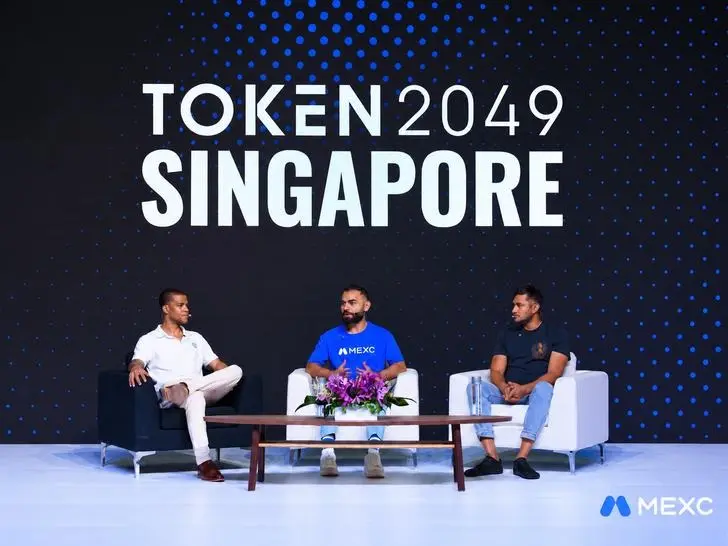
October 9, 2026 – As the boundaries between digital assets and traditional financial markets continue to blur, industry leaders are increasingly looking toward a unified global trading ecosystem. During a high-profile panel at TOKEN2049 in Singapore, representatives from prominent digital asset platforms shared their visions for the future of global finance. MEXC, a pioneer in zero-fee digital asset trading, and Payward, the parent company of major cryptocurrency exchange Kraken, offered deep insights into how market access, shifting retail demands, and strategic cross-platform collaboration are reshaping the financial landscape.
The discussion featured MEXC CEO Vugar Usi Zade and Payward Co-Chief Executive Officer Arjun Sethi. Together, the executive leaders examined the trajectory of global trading, focusing on how increased connectivity, modern technological infrastructure, and elevated retail engagement are breaking down long-standing barriers between decentralized ecosystems and legacy financial markets.
Crypto and TradFi Move Closer Together
A central theme of the TOKEN2049 panel was the ongoing transition from segmented, rigid trading environments toward interconnected, always-on global markets. For decades, traditional financial systems have relied on fixed operating hours, localized clearinghouses, and heavily siloed asset classes. However, the maturation of blockchain technology and distributed ledger infrastructure is presenting a direct challenge to these conventional market structures.
Vugar noted during the panel discussion that modern users increasingly expect instantaneous, friction-free access to a diverse array of financial instruments through a unified user experience. Rather than managing multiple accounts across disjointed platforms, market participants are demanding an environment where digital assets, equities, and derivatives can be accessed seamlessly.
"Over the next five years, we’ll see a convergence toward a singular platform where asset classes and investments can move quickly and smoothly," Vugar stated, highlighting the transformative potential of blockchain-based financial architecture. "Retail will be the main driver."
This sentiment underscores a broader structural shift within the global economy. Retail investors, empowered by technological advancements and low-barrier trading platforms, are no longer content with the restrictions of traditional banking and brokerage hours. They demand continuous liquidity and immediate settlement capabilities, forces that are compelling legacy financial institutions to rethink their operational models.
Addressing the technical foundation required to support this evolution, Arjun emphasized that the shift toward round-the-clock trading is fundamentally an engineering and liquidity challenge. True 24/7 market operations require complex backend infrastructure capable of mobilizing and managing collateral across disparate regulatory and technical environments.
"24/7 trading really means: how do you bring all that collateral into one place?" Arjun explained, pointing to the underlying complexity of uniting global liquidity pools into a single, cohesive financial framework.
Collaboration Over Competition
Beyond the technical integration of crypto and traditional finance, both executives stressed that scaling the next generation of global trading platforms will require a departure from isolated competition. Instead, the future of the industry will likely rely heavily on strategic partnerships, interoperability, and the mutual leveraging of distinct regional and operational strengths.
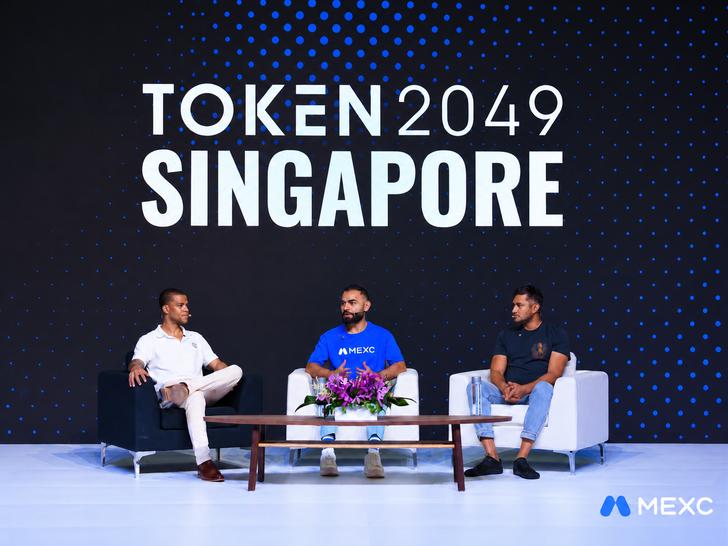
Arjun pointed out that serving an increasingly vast and diverse global user base efficiently is an objective that no single platform can easily achieve in absolute isolation. Succeeding on a global scale necessitates collaborative efforts with established market participants who possess deep localized expertise, regulatory alignment, and core strengths in specific geographic regions. Explicitly referencing MEXC during the conversation, Arjun highlighted the exchange as a prime example of a partner capable of driving success within key markets.
"The only way to do that is to partner with folks, including MEXC, to be able to help succeed in their core markets," Arjun noted.
Echoing this perspective, Vugar emphasized that digital asset exchanges and financial technology firms can achieve far more by building upon one another’s established competencies rather than viewing every market opportunity through a purely adversarial lens. Each platform brings unique structural advantages to the table. MEXC, for instance, has built its reputation on a retail-first philosophy, offering deep liquidity pools and extensive operational experience across both cryptocurrency perpetual markets and emerging tokenized assets. Meanwhile, Payward brings robust global financial infrastructure, professional-grade trading capabilities, and deep compliance and market experience within the United States.
This dialogue builds directly upon earlier indications from both companies that they are actively exploring broader cooperative initiatives. Both executive leaders pointed to core operational pillars such as infrastructure development, enhanced market access, and optimized distribution networks as primary areas where tighter connectivity between major platforms could unlock substantial long-term value for the industry.
Furthermore, the panel underscored that sustainable growth relies heavily on foundational principles like transparency, consumer trust, and unhindered market access. Vugar described trust and access as two indispensable cornerstones for building the financial platforms of tomorrow, while Arjun reiterated that absolute transparency is mandatory as financial networks become increasingly intertwined and globalized.
Ultimately, the TOKEN2049 panel illustrated a clear roadmap for the future: a financial ecosystem where cryptocurrency and traditional finance are no longer viewed as competing paradigms, but as complementary components of a unified global economy. Through calculated collaboration, enhanced infrastructure, and a relentless focus on retail empowerment, platforms like MEXC and Payward are helping lay the groundwork for a more accessible, efficient, and interconnected financial world.
About MEXC
Founded in 2018, MEXC has established itself as a leading global multi-asset trading platform designed to serve as a zero-fee gateway to infinite financial opportunities. Catering to active users across more than 170 international markets, the platform provides simple, streamlined, and efficient access to a comprehensive suite of financial products, including cryptocurrencies, traditional equities, tokenized assets, derivatives, and an expanding selection of TradFi-linked investment opportunities, all managed through a single unified account and gateway.
Characterized by zero trading fees, deep market liquidity, broad asset coverage, and a high-performance technological infrastructure, MEXC is purposefully engineered for retail users seeking to discover early opportunities, execute trades rapidly, and participate in global markets with minimal friction. As the convergence between digital assets and traditional finance accelerates, MEXC remains dedicated to democratizing global financial access, empowering users to trade freely and maximize every market opportunity.


Leave a Reply