
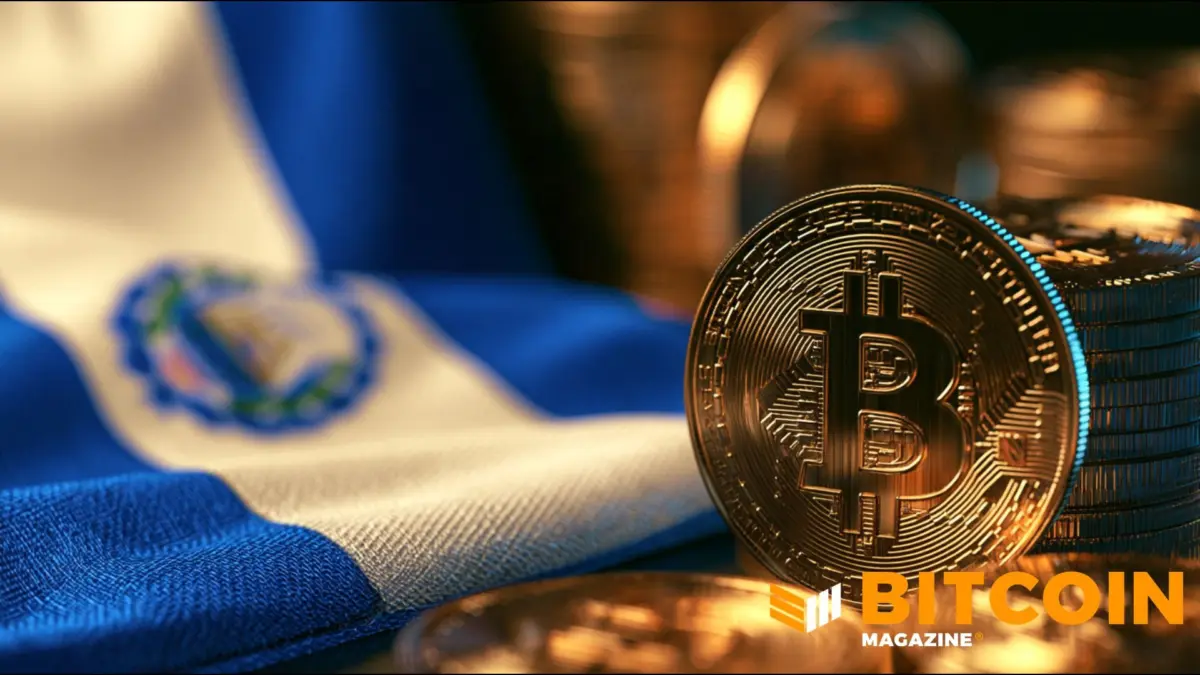
The International Monetary Fund has offered a mixed verdict on El Salvador’s recent economic trajectory, praising the Central American nation for tangible macroeconomic improvements while simultaneously reprimanding its government over its ongoing and controversial Bitcoin experiment.
In an official statement released on Friday, the global financial institution announced that it had formally approved a $139 million disbursement to El Salvador. However, this financial backing comes with explicit strings attached, as the agency continues its broader efforts to reduce the state’s direct involvement in Bitcoin-related activities.
The complex relationship between El Salvador and the international lending community dates back to 2021, when the Central American country made global headlines by becoming the first sovereign nation to adopt Bitcoin as legal tender. That bold legislative move drew immediate and sharp criticism from the IMF, the World Bank, and other major international financial institutions. The timing of the adoption was particularly delicate, as El Salvador was concurrently negotiating a multi-million-dollar development loan with the IMF at the time, sparking a tense standoff over fiscal policy and monetary risk.
The friction between the two entities has persisted over the years, frequently centering on transparency, public fund management, and the actual mechanics of the government’s cryptocurrency strategy. In September, the IMF publicly asserted that El Salvador was not actively purchasing Bitcoin, a claim that stood in direct contradiction to repeated public assertions from the nation’s official Bitcoin Office, which has consistently maintained that the government continues to acquire the digital asset.
Despite the ongoing disagreement over cryptocurrency accumulation, the IMF acknowledged that the broader Salvadoran economy is currently outperforming previous forecasts.
"Economic activity has exceeded expectations, supported by sustained improvements in security and investor confidence, as macroeconomic imbalances continue to be addressed," the IMF stated in its assessment.
The turnaround in domestic security, largely attributed to President Nayib Bukele’s aggressive and widely publicized crackdown on violent street gangs, has dramatically shifted foreign and domestic investor sentiment, injecting new life into local commerce and tourism. At the same time, the government has worked to stabilize its broader fiscal outlook, satisfying key benchmarks required by international lenders.
Nevertheless, the path toward full financial alignment has not been entirely smooth. The IMF noted in its latest briefing that certain performance criteria outlined in their agreements were not fully met by Salvadoran authorities. Specifically, these shortcomings involved the government’s Bitcoin accumulation front. Despite these deviations, the IMF opted to grant formal waivers, a decision underpinned by what the institution described as strong corrective measures and renewed commitments from Salvadoran leadership.
Elaborating on these policy adjustments, the IMF indicated that the Salvadoran state’s direct involvement in Bitcoin-related activities is now actively being unwound. Crucially, the fund noted that no further Bitcoin accumulation is envisaged by the state beyond documented donations.
The question of how El Salvador was funding its cryptocurrency purchases has remained a point of public fascination and skepticism since 2022, when President Bukele boldly announced on social media that the country would adopt a strategy of buying one Bitcoin per day. That policy immediately raised eyebrows among economists and financial analysts, who questioned the origin of the capital being deployed for the daily purchases, and whether the policy was being executed consistently in practice.
Addressing these ambiguities in September, the IMF clarified that El Salvador had—at least for a significant period—refrained from utilizing public funds to acquire Bitcoin. Instead, the institution reported that the nation had acquired digital assets through private donations rather than direct treasury expenditures.
The tension over cryptocurrency policy ultimately culminated in a significant financial arrangement late last year. El Salvador and the IMF entered into a substantial $1.4 billion loan agreement at the end of December. However, securing this crucial lifeline required the government of El Salvador to make meaningful concessions, chief among them being a mandate to scale back certain ambitious aspects of its original Bitcoin strategy.
The origin of the experiment dates back to the autumn of 2021, when the Salvadoran government sought to rapidly bootstrap cryptocurrency adoption across the population. In a historic move, the state gifted thirty dollars’ worth of Bitcoin to every citizen who downloaded the newly minted state-backed Chivo wallet. The initiative was designed to integrate the unbanked population into the digital economy, reduce remittance fees, and position the country as a global hub for financial technology.
Yet, reality proved more complex than the initial vision. In a 2024 interview with foreign media, President Bukele openly admitted that ordinary Salvadorans were not utilizing the cryptocurrency to purchase everyday goods and services to the extent the government had initially hoped and anticipated. Despite the sluggish domestic adoption for daily commerce, Bukele and his administration continuously boasted about the government’s long-term holding strategy, frequently celebrating online that the state was continuing to "stack sats."


Leave a Reply