
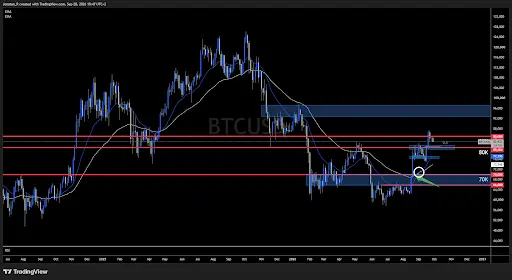
Crypto traders were given yet another stark reminder of how quickly excessive leverage can transform a standard price movement into a violent, cascading market event. In the fast-paced world of digital asset derivatives, where margins are razor-thin and liquidations are automated, positioning can dictate market direction just as powerfully as macroeconomic fundamentals or breaking news headlines.
Around $110 million in bearish short positions were wiped out in a staggering ten-minute burst on October 2, catching the market off guard as Bitcoin, Ethereum, and the broader digital asset landscape moved sharply upward. The forced closures of these derivatives trades were overwhelmingly concentrated on the bearish side of the ledger. For market observers, the episode offered a textbook demonstration of the exact structural mechanics that can accelerate a market rally long after the initial price candle has already formed.
Shorts Become Buyers When the Market Moves Against Them
To understand why a short squeeze can be so explosive, one must examine the mechanics of leveraged trading. A leveraged short position is designed to profit when an asset declines in value. Traders borrow the asset from an exchange, sell it immediately with the expectation of buying it back cheaper later, and pocket the difference. However, if the market price rises significantly instead, the trader’s collateral diminishes. If the price climbs past a specific threshold, the exchange automatically liquidates the trade to prevent losses from exceeding the available collateral pool.
Crucially, closing a short position requires buying back exposure on the open market. When thousands of traders are heavily positioned on the same side of the trade, those mandatory, automated purchases can hit order books almost simultaneously. The initial upward price tick triggers the first wave of liquidations. Those liquidations translate into aggressive market buying, which pushes the price higher still. That secondary price increase then triggers the next deeper layer of liquidations, creating a self-reinforcing feedback loop.
This dynamic is a recurring theme in digital asset markets. Earlier in the year, a prominent Bitcoin short squeeze similarly thrust liquidation records back into the industry spotlight, illustrating that while the exact scale and dollar figures change from event to event, the underlying plumbing of the derivatives market remains entirely consistent.
A Liquidation Burst Does Not Tell Us Why the First Candle Moved
In the aftermath of a rapid, high-volume market move, the immediate temptation for traders and commentators alike is to scramble for the nearest piece of news to explain the catalyst. Analysts often hunt desperately for a regulatory announcement, a macroeconomic data release, or a corporate treasury announcement to justify the sudden volatility.
In this instance, however, such gymnastics were entirely unnecessary. The only verified, indisputable part of the event was the severe liquidation data and the sudden, sharp upward price trajectory. Without a confirmed macro, regulatory, or corporate catalyst driving the spot market prior to the move, attributing the squeeze to a specific headline risks turning routine market speculation into misleading reporting.
Sometimes, positioning alone is more than enough to drive significant price action. Perpetual futures and other sophisticated leveraged products routinely allow traders to build crowded, lopsided positions even when spot markets appear relatively calm and range-bound. Furthermore, large onchain positions are becoming increasingly transparent and easier for market participants to observe in real time. Recent institutional-grade positioning—such as multi-million-dollar Ethereum short positions opened on decentralized venues like Hyperliquid—demonstrates how professional-sized risk continues to flow into transparent environments where order books can be monitored by the public.
ETF Demand Adds Another Layer to the Flow Picture
The sudden short squeeze also unfolded against a backdrop of shifting institutional dynamics, notably as United States spot Bitcoin exchange-traded funds returned to positive daily net inflows. These regulated spot products operate under an entirely different structural framework compared to perpetual futures, yet both ultimately influence short-term market liquidity.
Spot ETF creations represent direct, organic demand for regulated Bitcoin exposure, requiring issuers to acquire actual coins to back their shares. Leveraged derivatives, conversely, do not necessarily require underlying spot accumulation immediately, but they possess the capacity to drastically magnify price fluctuations when market participants are forcibly squeezed out of their positions. Recent coverage of the ETF sector has highlighted how large issuer-level capital swings can occur even on days when aggregate flows remain firmly in the green. This complex interplay between regulated spot demand and leveraged derivatives underscores why looking at a single headline price candle rarely tells the whole story of a market move.
The Leverage Has Been Reset, Not Eliminated
The rapid wipeout of $110 million in short exposure successfully cleared a substantial amount of bearish leverage from the market architecture. However, it is vital to recognize that clearing leverage does not mean leverage has disappeared from the ecosystem entirely.
Traders can, and frequently do, reopen speculative positions almost as quickly as they are closed out. A violent squeeze can just as easily be followed by an abrupt reversal or a sharp correction if sustained spot market demand fails to materialize in the wake of the liquidation event.
For the time being, the most straightforward takeaway from the October 2 volatility burst is that market positioning had become crowded enough that a relatively rapid upward price shift was all it took to force a massive wave of short exposure out of the system within a matter of minutes. In the high-stakes arena of crypto derivatives, that sudden exhaustion of opposing liquidity is often all the fuel a burgeoning rally needs to keep moving forward.



Leave a Reply