
It is a well-worn tradition across the role-playing game genre to introduce an off-stage antagonist who has been secretly pulling the strings from the shadows all along. More often than not, this shadowy figure takes the form of a malevolent supernatural entity harboring a deep-seated disdain for humanity. After hours of dramatic monologues concerning the nature of free will, players and their loyal companions are inevitably tasked with vanquishing this ultimate foe using the reliable trifecta of the power of friendship, legendary weapons, and stylized armor design.
While Fire Emblem: Fortune’s Weave eagerly embraces this time-tested narrative trope, its abruptly introduced baddie is rendered with such an outrageous, unapologetic level of malevolence that the gamble pays off remarkably well. Following the leisurely pace of Act 1—which focuses heavily on gift-giving, social bonding, and cultivating relationships among the cast—Act 2 of Fortune’s Weave grabs the player by the collar and drops them straight into the deep end. It serves as a striking reminder that storytelling tropes exist for a fundamental reason: when executed with precision and narrative conviction, they can still deliver an intensely satisfying emotional punch.
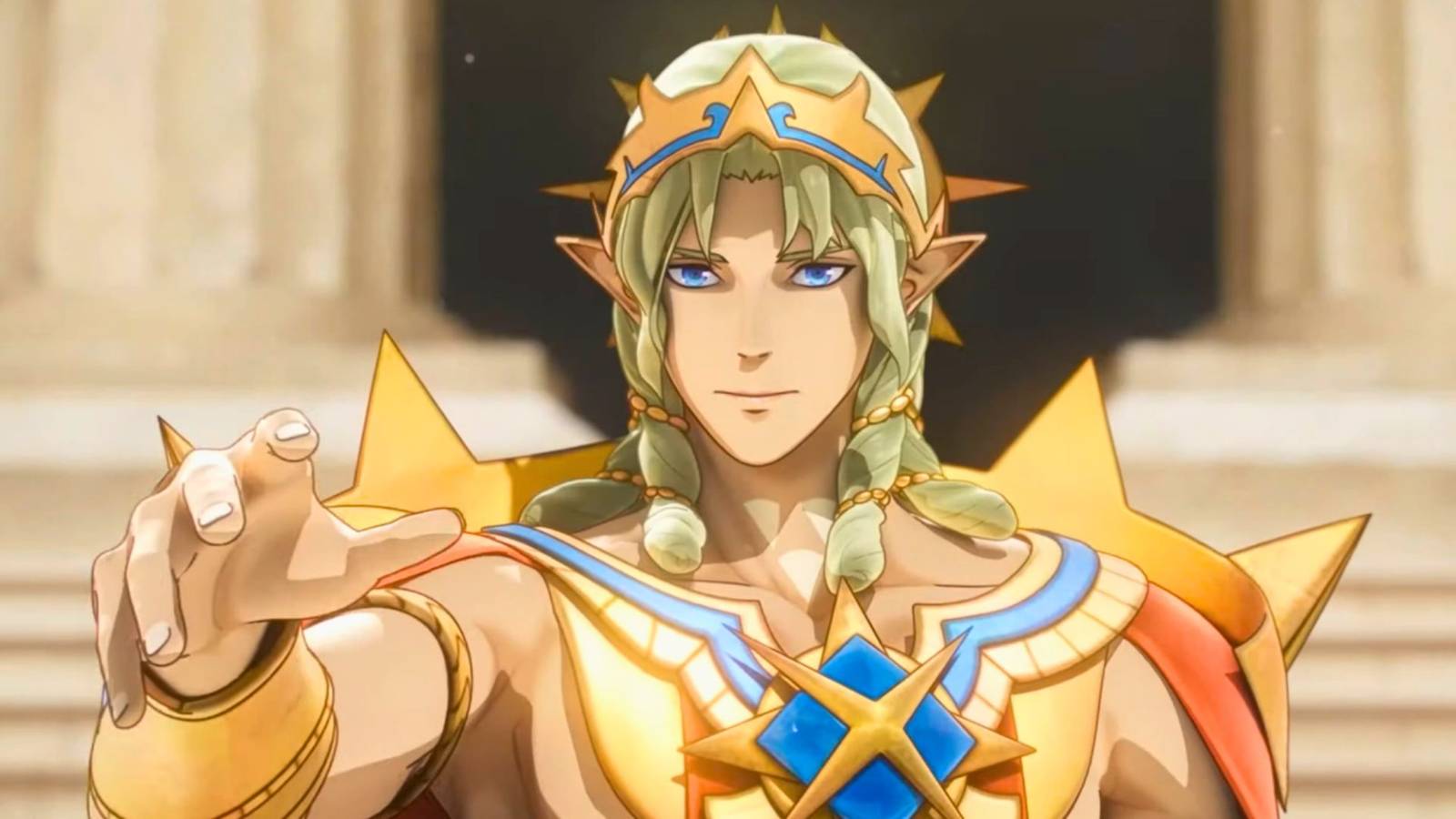
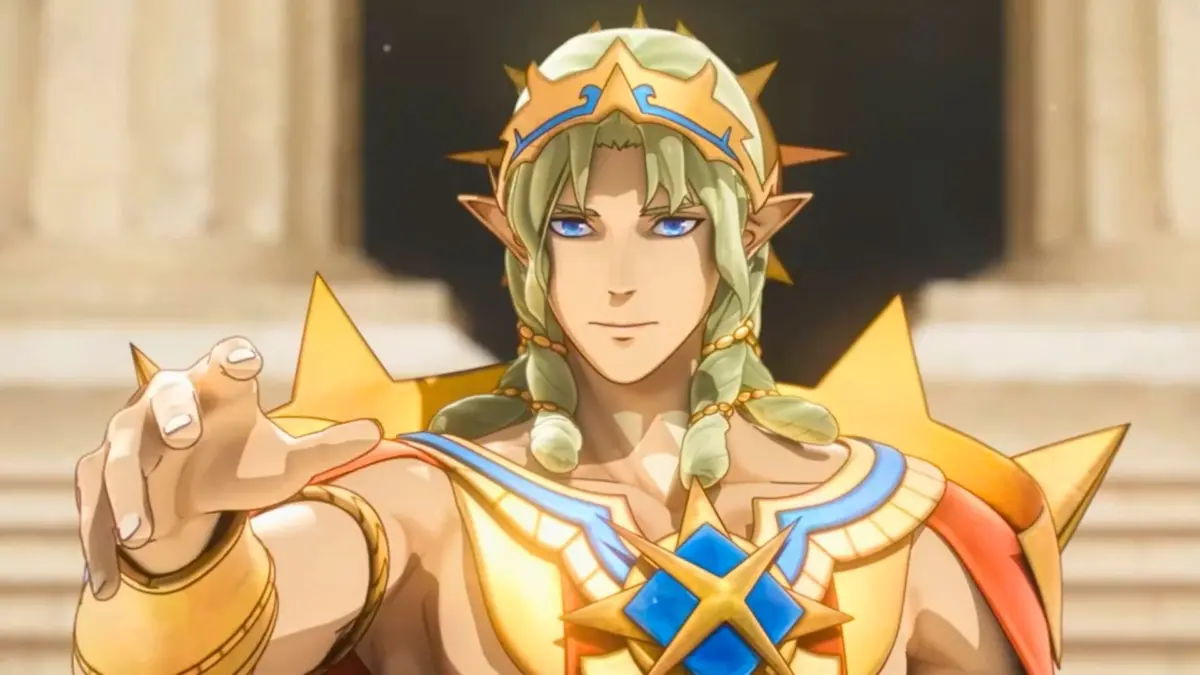
To step into Act 2 of Fortune’s Weave, known widely as the War Arc, players must interact with the Strife Obelisk. This pivotal progression point is typically reached after a player has completed at least one of the four distinct routes available in Act 1, though it is technically possible to trigger the transition directly after completing the prologue. From this moment onward, the narrative leaps forward several months past the pomp and circumstance of the Heroic Games. It is here that players are introduced to Raksha, the secretive, green-haired schemer who hides behind a wooden mask. Raksha has successfully resurrected her father, Emperor Dagda, following a dormant slumber that lasted half a millennium. And as it turns out, the revived emperor is remarkably unpleasant.
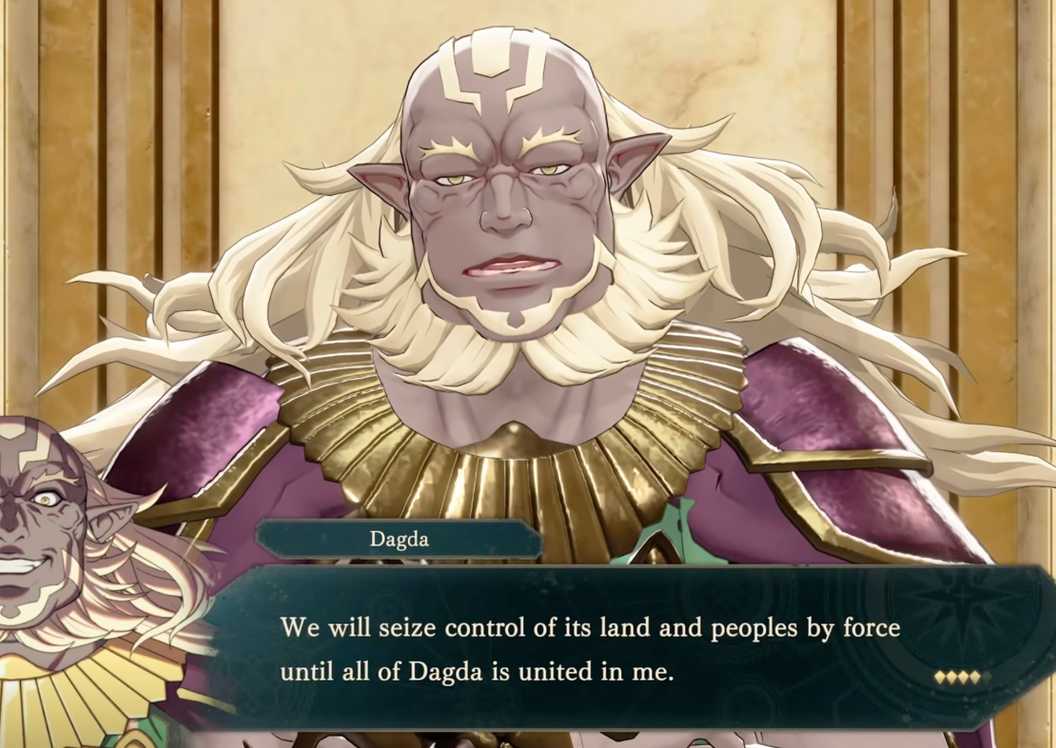
Dagda abandons any pretense of being a fair, just, or diplomatic leader from the very moment he reclaims his throne, making figures like Edelgard from Fire Emblem: Three Houses look practically saintly by comparison. Scarcely has he returned to the political landscape when he brutally murders his own son, Solel. Following this shocking act of familial violence, Dagda declares an unmitigated “war of annihilation” against Saramis, the southern region of the continent that conveniently serves as home to many of the game’s prominent characters of color.
In addition to his military aggression, Dagda orders the demolition of Dagsion’s beloved arena, replacing it with a grim structure he chillingly refers to as his "cauldron." With the era of bread and circuses brought to an abrupt and violent end, the once-vibrant capital city transforms almost overnight into a dystopian hellscape. Imperial troops routinely terrorize ordinary citizens, beating them in the streets and expropriating their food and financial resources to feed the ambitions of their tyrannical ruler.

Dagda’s radical extremism and unyielding cruelty soon alienate even the Empire’s staunchest allies, many of whom ultimately choose to defect and align themselves with Theodora’s resistance forces on the Saramis side of the conflict. Confronted with a series of humiliating military defeats at the hands of this growing resistance, Dagda arrives at a horrifying conclusion. Rather than reassessing his strategy, he orders that every single citizen of Dagsion—numbering roughly one million souls—be cast into his newly constructed cauldron.
While this grotesque process is mercifully kept off-screen, the mechanical result is total annihilation. The bodies and souls of the entire civilian population are liquefied into a horrific slurry known as flamma. Dagda consumes these soul-extract beverages by the bowlful, using the concoction to restore his physical vitality or simply as a remedy whenever his perpetual bad mood flares up.
The striking parallels between Dagda and various contemporary political figures are difficult to overlook. From his overt prejudice and penchant for declaring aggressive wars on a whim, to his all-consuming greed, self-interest, and circle of scheming yet inept offspring, his bottomless capacity for cruelty gives him an unmistakably punchable face.
Fortunately for those finding the narrative parallels a bit too close to home, Dagda’s spectacular fall from power arrives just as abruptly as his sudden rise. Intoxicated by the stolen souls of a million murdered subjects, the tyrant undergoes a monstrous transformation, taking the form of an almighty dragon and awaiting the resistance forces atop the highest peak in Dagsion. In this draconic state, he appears entirely impervious to standard attacks—that is, until Eshmel arrives unexpectedly to deliver a humiliating blow. With his protective defenses shattered, the player’s party is finally given the opportunity to overwhelm him in combat until he is thoroughly defeated. While the victory provides a profound sense of catharsis, the brief respite is short-lived as a fresh new evil immediately begins to rise in his wake.
Within the broader scope of Fortune’s Weave, particularly for players who experience multiple Act 1 routes, Dagda’s actual screen time in the narrative is surprisingly brief. Yet, his presence is so vividly and unreservedly wicked that he leaves a lasting impression. Furthermore, the combat encounters peppered throughout this section of the game are noticeably more demanding and complex, ensuring that every hard-fought victory against his imperial forces feels deeply earned. Even though he ultimately occupies a stepping stone rather than the role of the game’s absolute final antagonist, this soul-guzzling tyrant leaves an indelible mark on the narrative journey of Fortune’s Weave.


Leave a Reply