
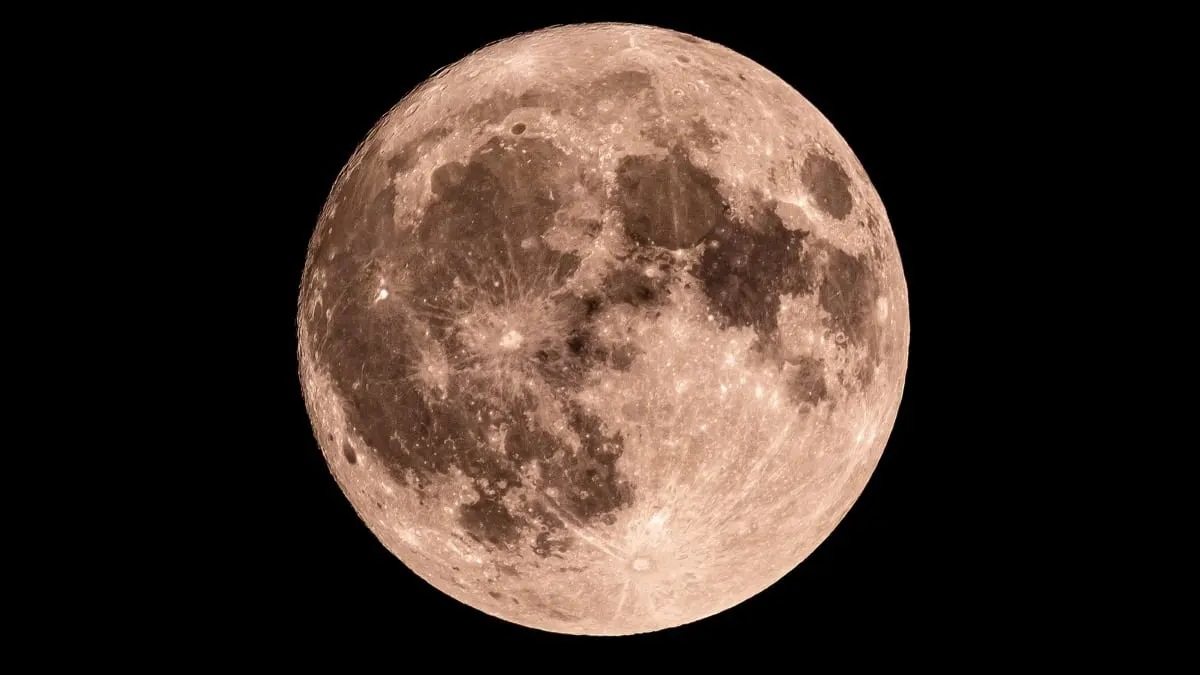
Even though the peak of the Full Moon has officially passed, Earth’s celestial companion continues to put on a dazzling nighttime display. Stargazers stepping outside tonight will find a lunar disk that appears almost completely illuminated, offering a magnificent view for anyone looking up at the night sky.
As of Monday, Sept. 28, data from NASA’s Daily Moon Guide indicates that the Moon has transitioned into the waning gibbous phase. Despite this subtle shift in the lunar cycle, roughly 97 percent of the lunar surface remains visible to observers on Earth. While the illumination is beginning to recede, the change from the previous night is barely perceptible to the naked eye, ensuring that casual observers and avid astronomers alike will find plenty of breathtaking features to admire under the evening sky.
What is Today’s Moon Phase?
The ongoing journey of the lunar cycle means that the Moon’s appearance is constantly, if gradually, evolving. Following the high-illumination spectacle of the Full Moon, the waning gibbous phase marks the beginning of the retreat toward darkness, though this transition happens slowly enough that tonight’s view loses almost none of its brilliance.
For those equipped with nothing more than their own eyes, several prominent lunar maria—the vast, dark basaltic plains formed by ancient volcanic eruptions—are clearly distinguishable. Stargazers can readily spot the Mare Imbrium, the Mare Serenitatis, and the Mare Tranquillitatis without the need for any visual aids or specialized equipment. These expansive dark patches have long captured the human imagination, serving as key landmarks on the face of the Moon.
Observers who happen to have a pair of binoculars on hand will be rewarded with an even more detailed look at the rugged lunar landscape. Binoculars bring several notable craters into sharper focus, allowing skywatchers to examine the intricate details of the Clavius Crater, the Alphonsus Crater, and the Gassendi Crater. Each of these geological formations tells a story of the intense impacts and tectonic shifts that have shaped the lunar surface over billions of years.
For amateur astronomers with access to a telescope, the night sky opens up even further. High-powered optics reveal historical touchstones of human space exploration, including the precise landing spots of the Apollo 12 and Apollo 16 missions, where human footprints still rest undisturbed in the lunar dust. Telescopic views also highlight the dramatic elevations of the Rima Caucasus Mountains, showcasing the sharp ridges and deep valleys that define the Moon’s complex topography.
When is the Next Full Moon?
As the lunar disk slowly diminishes over the coming weeks, the natural question for many skywatchers turns to when the cycle will peak once again. The next Full Moon is slated to take place on October 25 or October 26, with the exact calendar date depending entirely on the observer’s specific timezone across the globe. Until then, the nightly journey of the waning moon will continue to provide shifting shadows and changing perspectives across the lunar terrain.
What Are Moon Phases?
To understand why the Moon looks different from one night to the next, it helps to examine the mechanics of our solar system. The Moon goes through a predictable, repeating cycle as it orbits around the Earth, taking roughly 29.5 days to complete one full revolution.
During this continuous journey, the perspective from Earth changes regarding how much of the Moon’s sunlit side is visible to us. This shifting geometry is what creates the familiar and distinct lunar phases that have tracked the passage of time for human civilizations across millennia. The cycle begins with a slim, nearly invisible crescent, gradually expands through a half-moon appearance, and eventually culminates in the brilliant expanse of the Full Moon, before beginning the entire process over again.
According to NASA, the specific phase we observe on any given night depends entirely on the relative positions of the Moon, the Earth, and the Sun. As the Moon travels along its orbital path, the angle of sunlight hitting its surface—and the corresponding angle from which we view it from Earth—dictates how much illumination is visible from our terrestrial vantage point.
This monthly progression is broken down into eight distinct phases, starting with the New Moon, where the Moon positions itself directly between the Earth and the Sun. In this alignment, the side of the Moon facing us is cast in shadow, making it virtually invisible to the naked eye.
As the Moon continues along its orbit, a small sliver of light begins to appear on the right side for observers in the Northern Hemisphere, marking the Waxing Crescent phase. This illuminated portion grows steadily until the First Quarter, where exactly half of the lunar disk is lit on the right side, creating a classic half-moon appearance.
The journey continues into the Waxing Gibbous phase, where more than half of the Moon is illuminated, though it has not yet reached its maximum fullness. This leads directly into the Full Moon, the point in the cycle where the entire face of the Moon is directly illuminated by the Sun and fully visible from the night side of the Earth.
Following the peak, the cycle enters its second half. The Waning Gibbous phase—the current state of the Moon—begins the slow process of the Moon losing light from the right side as viewed from the Northern Hemisphere. This is followed by the Third Quarter, or Last Quarter, which presents another half-moon view, though this time with the left side illuminated. Finally, the cycle winds down with the Waning Crescent, leaving only a thin sliver of light remaining on the left side before the Moon slips entirely back into shadow for the next New Moon.



Leave a Reply