

For years, Vietnamese football fans looking for free, easily accessible Premier League streams complete with local commentary knew precisely where to look. Platforms operating under the banner of “Xoi Lac TV” and its sister sites provided unauthorized broadcasts of all major football leagues. Whenever internet service providers or authorities managed to block a specific web address, the operators would simply pivot, launching new domains almost overnight to maintain uninterrupted service to millions of viewers.
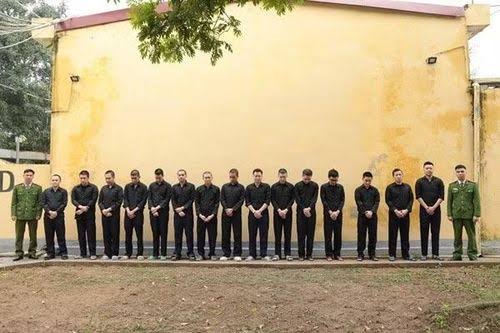
What began as an informal workaround for budget-conscious fans ultimately blossomed into a lucrative, highly organized enterprise. With betting banners prominently displayed alongside every broadcast, the network generated substantial revenue from online gambling companies. That immense commercial success eventually caught the attention of Vietnam’s cybercrime police, who launched coordinated raids against the operation in February, arresting and initially charging 30 suspects a month later.
However, that early enforcement action served merely as the opening chapter in an ongoing legal saga that has since taken on significant international weight. With the conclusion of the Hung Yen provincial police investigation, authorities have expanded the scope of the case dramatically, pressing forward with charges against a total of 74 defendants as the legal process moves toward its next phase.
A Massive Piracy Operation with its Own Commentators
According to details emerging from local media reports published by outlets such as Dan Tri and VnExpress, the case centers on two deeply intertwined piracy networks that grew rapidly over several years. The primary operation, known simply as “90 Phut,” was founded in late 2018. Investigators allege that Hanoi technology entrepreneur Pham Nguyen Dung provided the initial capital and financial backing, while programmer Nguyen Cong Dinh wrote the underlying code. The two men reportedly agreed to split the profits generated by the venture.

By the time law enforcement authorities moved in to dismantle the network in February, the operation had expanded into a sprawling digital empire. It encompassed a suite of prominent pirate streaming sites, including XoilacTV, 90PhutTV, VeboTV, ThapcamTV, BanhkhucTV, and CakeoTV. Meanwhile, records show that Dinh also managed a separate yet related streaming network named “Cakhia” in partnership with another defendant.
The 74 suspects recommended for prosecution represent a cross-section of the operation’s extensive workforce. Among those targeted are more than 30 Vietnamese commentators who provided live play-by-play analysis for the broadcasts. These commentators were typically compensated between 200,000 and 500,000 Vietnamese dong per match, translating to roughly $8 to $20 USD. Other defendants named in the police files were responsible for technical infrastructure, managing servers, overseeing video streams, and handling the network’s complex financial accounts.
The network’s commentary team served as a core part of its brand identity, attracting devoted audiences through colorful pseudonyms such as “Batman” and “Scarecrow.” Investigators ultimately unmasked “Batman” as none other than lead programmer Nguyen Cong Dinh himself. According to police estimates, Dinh personally amassed more than 12 billion dong, equivalent to approximately $470,000 USD, directly from his involvement in the illicit operation.
Forensic analysis of the streaming infrastructure revealed that the sites unlawfully broadcast 1,529 individual football matches without authorization. These unauthorized transmissions infringed heavily upon the exclusive exhibition rights held by the Premier League and various domestic sports broadcasters. Simultaneously, the platforms monetized their massive web traffic by selling advertising space to unauthorized online gambling brands, including 8XBET, LU88, Man88, and HBET.
Police financial estimates indicate that these gambling advertisements generated over 130 billion dong—roughly $5 million USD—between April 2025 and January 2026 alone. While these figures reflect the direct advertising revenues captured by the operators, official copyright holders argue that the true economic damage to the industry is vastly higher.

Vietnam’s primary pay-TV provider, K+, has preliminarily estimated its financial losses resulting from the piracy network at more than $83 million. Meanwhile, the Premier League—which licenses its valuable broadcast rights to K+ for the Vietnamese market—estimates its own direct damages at more than $4.6 million. These staggering financial claims will be subject to formal review and confirmation during an eventual courtroom trial.
Gambling Charges Carry the Greatest Legal Weight
The 74 defendants implicated in the Hung Yen police report face a wide array of criminal offenses under Vietnamese law, ranging from copyright infringement and organizing gambling to direct gambling and the distribution of obscene material. Out of the total group, 51 individuals—including alleged masterminds Dung and Dinh—have been specifically recommended for prosecution on combined counts of copyright infringement and organizing gambling.
Although the network gained widespread notoriety as a piracy hub, legal experts note that the gambling-related offenses carry far more severe penal consequences under the legal framework of Vietnam. The country’s Penal Code rigidly caps prison sentences for intellectual property and copyright infringement at a maximum of three years, regardless of how profitable the illegal enterprise proved to be. By contrast, organizing gambling as a professional, large-scale operation can carry prison sentences of up to ten years.
Consequently, the illicit betting advertisements that funded the streaming empire are expected to form the foundation of the harshest penalties handed down in the case. For now, however, the legal status of the defendants remains provisional. Under Vietnamese criminal procedure, the conclusion of a police investigation marks the submission of a formal written report proposing prosecution. The state prosecution service now has up to 30 days to review the file, decide whether to formally indict the suspects, return the dossier to police for supplemental investigation, or drop the case entirely.
Thanks From London, Pressure From Washington
The high-profile dismantling of the “Xoi Lac” network has reverberated far beyond Southeast Asia, drawing mixed reactions from international governments. In May, Vietnam’s Ministry of Public Security publicly announced that the British Embassy in Hanoi had delivered an official letter of appreciation, commending local law enforcement for taking decisive enforcement action to safeguard the intellectual property rights of British-held content.
At the same time, however, diplomatic pressure from the United States remained intense. In late April, the Office of the United States Trade Representative designated Vietnam as a “Priority Foreign Country” due to mounting concerns over widespread online piracy—marking the first time in 13 years that any nation had been assigned this specific label.
Just a month following that designation, the USTR initiated a formal Section 301 investigation into Vietnam’s intellectual property enforcement practices. The proceeding carries the potential for punitive trade tariffs if intellectual property protections are not deemed satisfactory. While acknowledging that Vietnam had taken initial steps to address domestic infringement, the USTR maintained that ongoing piracy continues to impair the competitive standing of American innovators and creators.
Although the original raids against Xoi Lac occurred weeks prior to the USTR’s official designation, Vietnamese authorities have increasingly pointed to the crackdown as evidence of compliance. In July, as part of its formal rebuttal submitted to Washington, Vietnam cited the Xoi Lac operations alongside the high-profile takedowns of other pirate platforms like Rophim and Y2Mate, formally petitioning to be removed from the priority watch list.
Vietnam’s diplomatic defense also highlighted ongoing enforcement actions against the operator of the anime piracy platform HiAnime, where criminal proceedings against seven suspects were announced by the Ministry of Public Security on the exact same day Vietnam filed its formal response in Washington.
Whether the timing of the massive 74-defendant prosecution recommendation was influenced by broader geopolitical pressures remains unclear. The final decision now rests with prosecutors, who must determine the next procedural steps in the courtroom. Meanwhile, despite the historic crackdown on the infrastructure of Xoi Lac, online searches for the brand and its former domains continue to yield a persistent list of copycat websites, leaving the identities of their current operators shrouded in anonymity.

Leave a Reply