
The Fedora Design Team has demonstrated that organizing and executing a virtual conference entirely through open-source tools is not only possible, but highly effective. In January 2023, the team hosted the inaugural Creative Freedom Summit, an event designed to explore how open-source software intersects with digital creativity, design, and multimedia production. By relying on a decentralized and community-driven technology stack, organizers aimed to align the operational ethos of the conference with the open-source philosophy championed by its participants.
While proprietary platforms often dominate the virtual events landscape due to their convenience and integrated features, the Fedora Design Team chose a different path for the summit. The resulting experiment offered valuable insights into the logistical challenges, technical workarounds, and community-driven successes of running an entirely open-source virtual conference. Organizers have since evaluated both the triumphs and the shortcomings of their approach to lay the groundwork for future iterations of the event.
Origins of the Creative Freedom Summit
The inception of the Creative Freedom Summit trace back to the review process for Flock, the annual conference for Fedora users and contributors held in August 2022. Marie Nordin, a key organizer within the Fedora community, was reviewing talk submissions for the event when she noticed an overwhelming surge of proposals focused on design and creativity within the open-source ecosystem. The volume of submissions vastly exceeded the available slots for the event, highlighting a distinct appetite among creators for a dedicated space to discuss open-source creative tools.
Recognizing this demand, Nordin brought the idea of a specialized conference to the Fedora Design Team in the fall of 2022. Planning began immediately for a targeted virtual event scheduled for January 17 through 19, 2023. Given the compressed timeline and the novelty of the conference, organizers decided to curate the speaker lineup by invitation, drawing from the surplus of design-focused Flock submissions and their broader professional networks. Nearly every prospective speaker invited agreed to participate, resulting in a packed schedule that precluded the need for an open Call for Papers and its associated management infrastructure.
Navigating the Open-Source Dilemma for Events
Since the onset of the COVID-19 pandemic, the primary Fedora Flock conference has utilized Hopin, a proprietary online platform that accommodates open-source communities. While Hopin offers a polished, professional event experience complete with integrated sponsor booths, multiple tracks, hallway chat functionalities, and built-in moderation tools, it remains closed-source software. Because the Creative Freedom Summit operated under the Fedora umbrella, organizers had access to the community’s existing Hopin infrastructure, presenting a tempting shortcut for the new event.
However, for contributors with decades of experience in the open-source movement, utilizing proprietary software to host an event centered on open-source principles presented an ideological conflict. Balancing philosophical purity with the practical demands of large-scale event production remains a persistent challenge for community organizers. There is rarely a singular correct answer when weighing these factors, as organizers must evaluate their specific budget constraints, technical capabilities, community values, and tolerance for potential operational friction.

For the Creative Freedom Summit, the organizing team operated with zero financial budget but a wealth of motivated volunteers. They leveraged existing supported infrastructure, including the Fedora Matrix server and a hosted WordPress website. Technical leads possessed direct experience managing live weekly video calls via PeerTube, giving the team the confidence to embrace an all-open-source stack despite the risk of minor technical glitches or rough edges.
Building the Open-Source Conference Stack
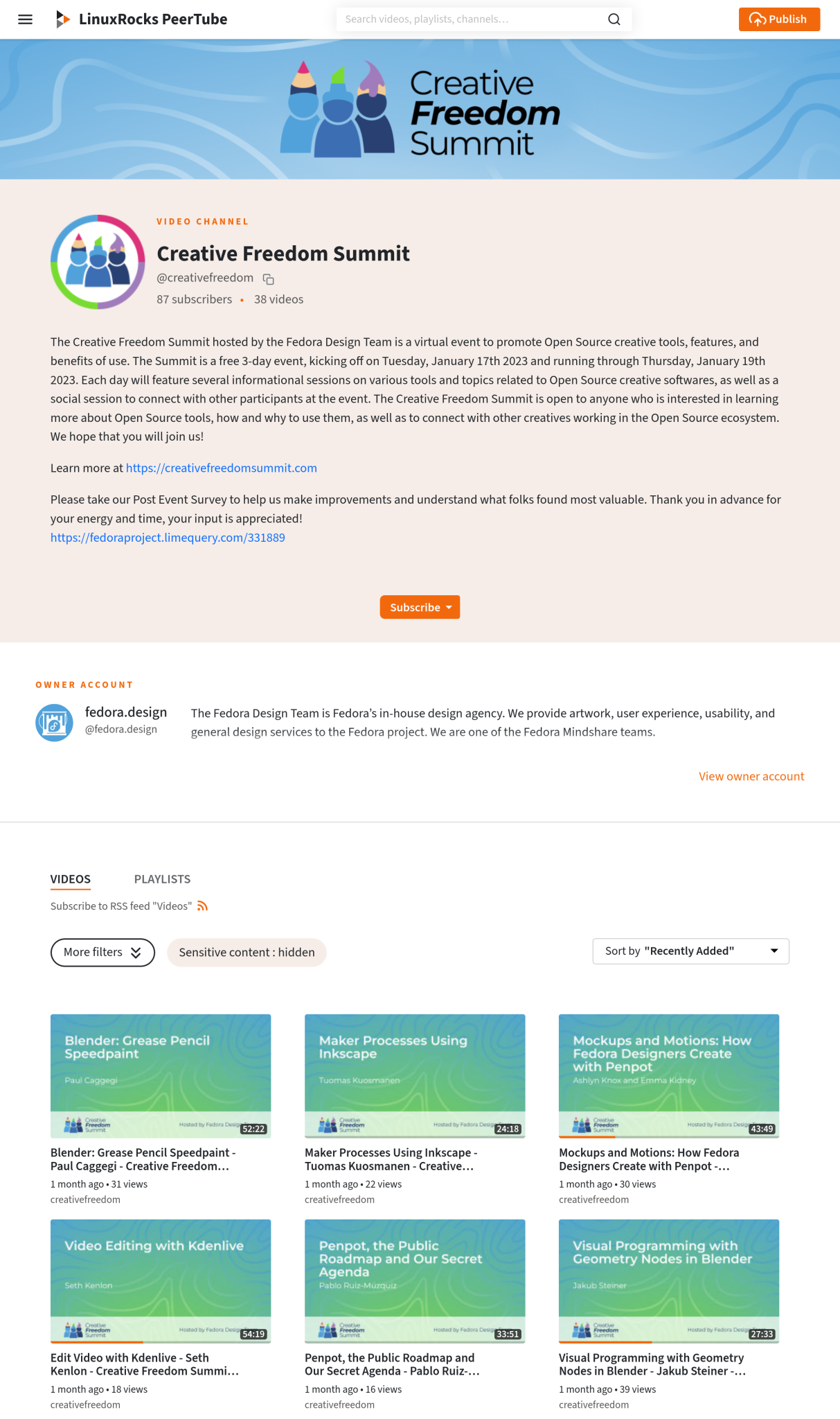
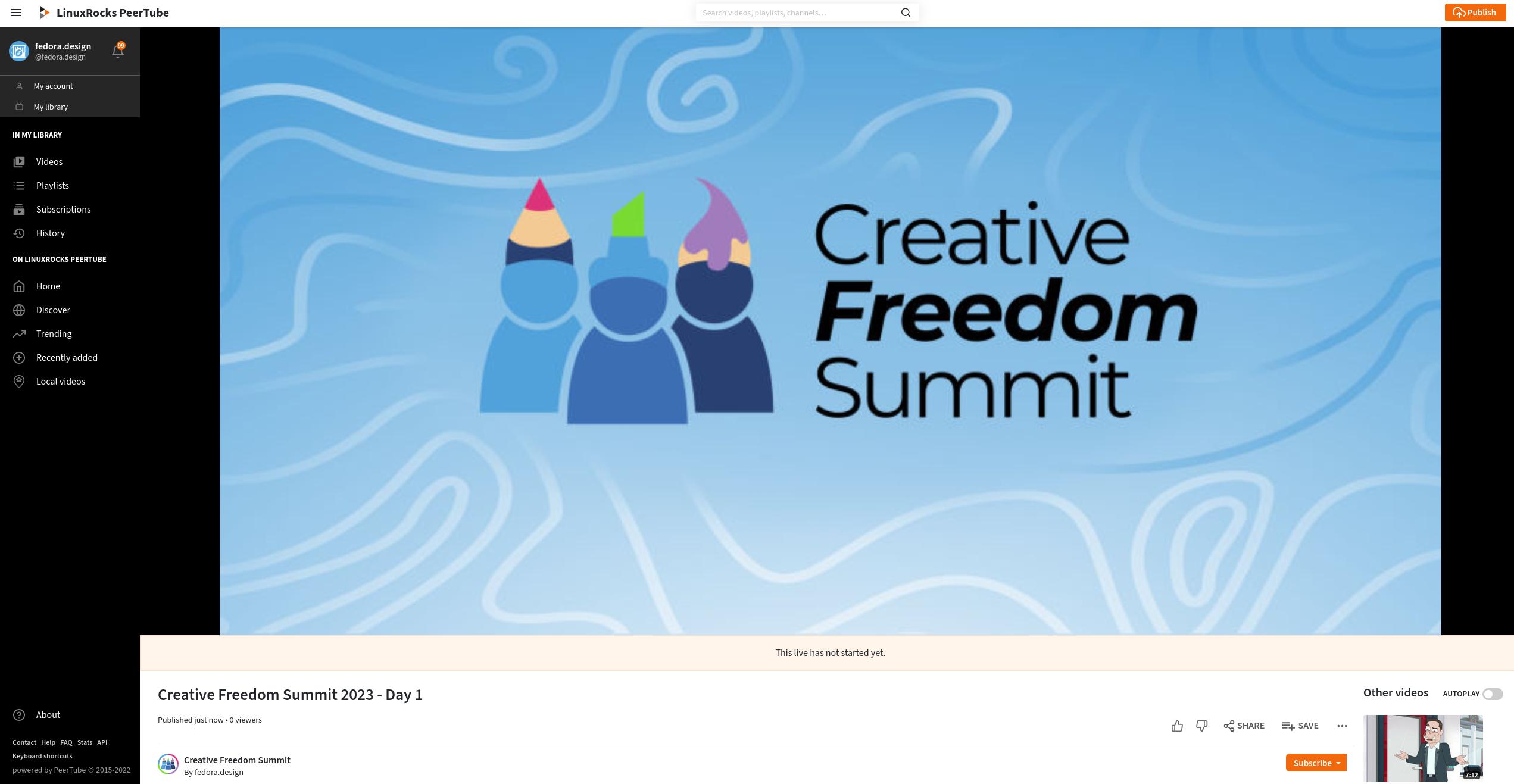
The technical architecture of the Creative Freedom Summit relied on a carefully curated collection of open-source applications to handle live streaming, video conferencing, backchannel communication, and participant engagement. For the live video stream, the team utilized a PeerTube instance generously hosted by LinuxRocks.online. PeerTube is a decentralized, free, and open-source video platform integrated into the broader Fediverse.
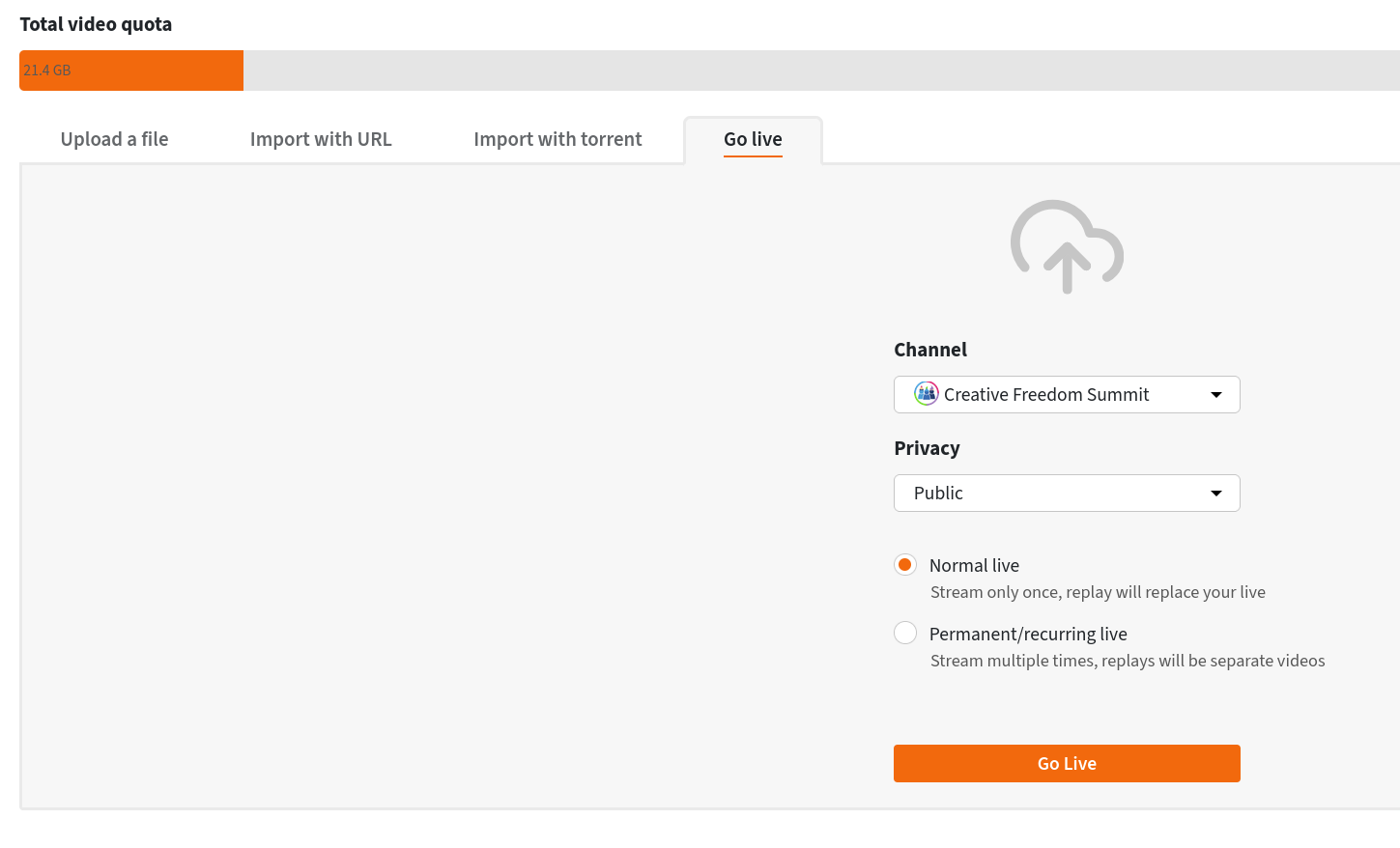
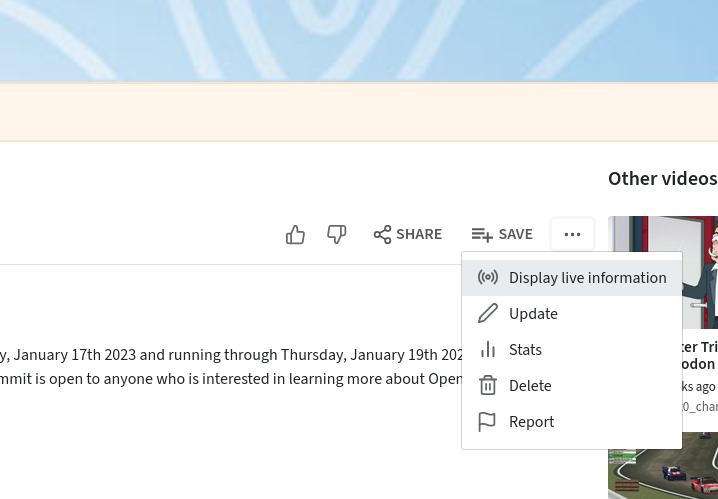
One of the defining advantages of PeerTube for live events is its automated post-stream processing. Unlike traditional platforms that require manual video exporting, uploading, and transcoding, PeerTube automatically generates a near-instant replay recording on the host channel as soon as a livestream concludes. This feature drew high praise from attendees in the chatroom, who could review missed sessions within minutes of their completion without any manual intervention from the volunteer organizing team.
To facilitate the live stage where speakers presented their talks and shared their screens, organizers utilized Jitsi Meet, a widely deployed and free open-source video conferencing platform. By creating a secure meeting room with a custom URL shared exclusively among speakers and hosts, the team established a controlled environment. Organizers configured a virtual waiting room, or lobby, allowing presenters to join shortly before their scheduled time without interrupting ongoing sessions.
Managing the Broadcast and Communication Infrastructure
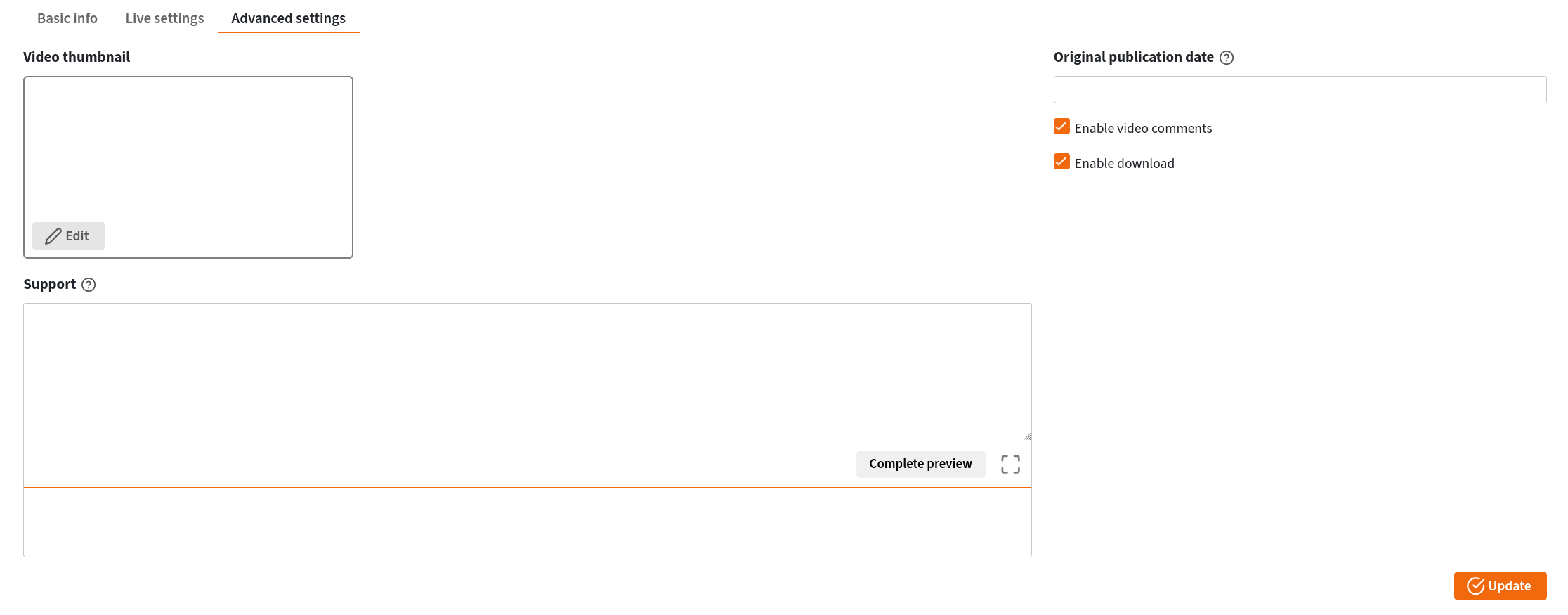
Bridging Jitsi Meet with PeerTube involved establishing a reusable streaming connection using Real-Time Messaging Protocol parameters provided by PeerTube. By maintaining a standardized streaming URL and key across shifts, volunteer hosts could seamlessly initiate broadcasts without generating new credentials for every individual presentation.
However, live execution revealed valuable lessons regarding stream management. On the first day of the conference, organizers allowed the Jitsi broadcast stream to run continuously across multiple talks. This resulted in long video files containing several distinct presentations, complicating the instant-replay experience for attendees seeking specific sessions. For subsequent sessions and future planning, the team recognized the necessity of toggling the stream off between talks to ensure a clean, single-video archive for every presentation.
Audio management also presented a learning curve. Live audio feedback loops occasionally occurred when monitoring tabs were left active during broadcasts, underscoring the importance of rigorous pre-event testing and disciplined tab management for emcees handling multiple communication channels simultaneously.
Behind the scenes, the organizing team utilized Element, a client for the decentralized Matrix communication protocol, to maintain an invite-only backstage channel for speakers. This channel proved essential for real-time coordination, schedule adjustments, and managing unexpected emergencies. For general attendees, the team relied on a centralized Matrix room enhanced with embedded widgets. These widgets displayed the live PeerTube video stream alongside collaborative document pads hosted on HackMD.io, which housed the daily schedule, announcements, and a crowd-sourced question-and-answer space for the audience.
Post-Event Collaboration and Video Production
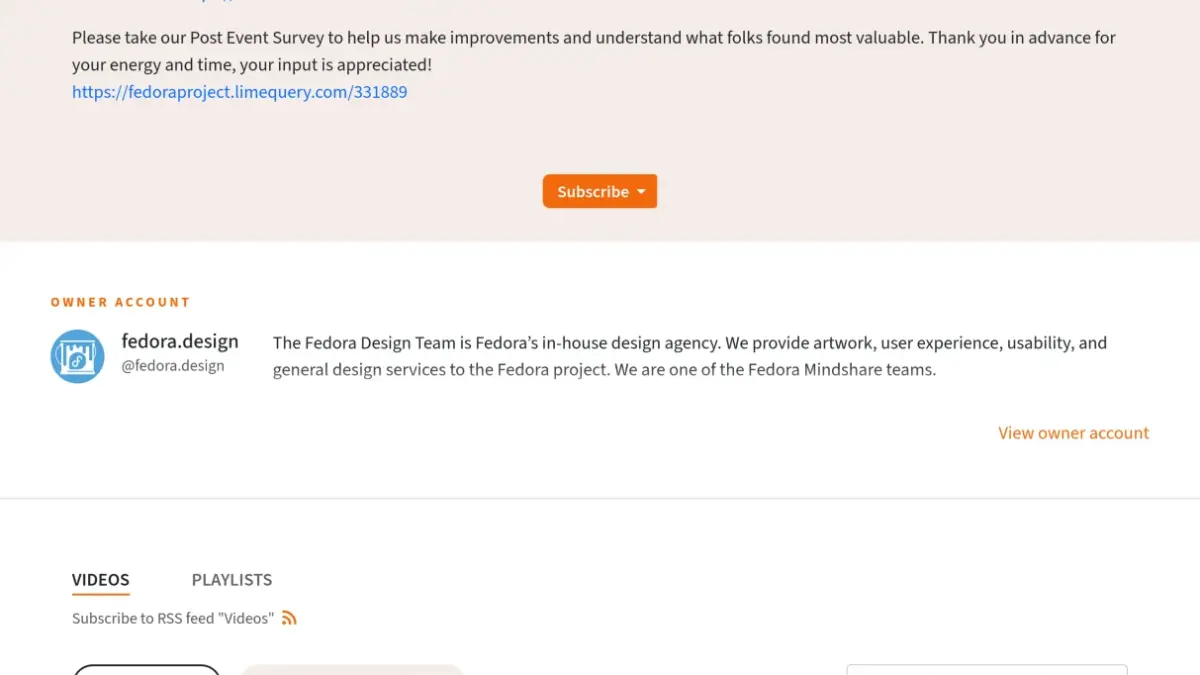
Following the conclusion of the summit, the community transition shifted from live broadcasting to post-production and evaluation. Organizers deployed an open-source survey via LimeSurvey to gather feedback from participants, utilizing the collected data to refine their approach in regular post-event debrief meetings.
A dedicated group of volunteers rallied through the conference Matrix channel to handle video editing, cleanup, and the addition of title cards and branding elements. Using GitLab epics and customized issue tracking labels, the volunteer corps coordinated the download of raw PeerTube recordings, performed necessary audio-visual enhancements, and re-uploaded the finalized files.
To address accessibility, the team explored automated captioning solutions. While live captioning was not integrated into the live broadcast stream, post-event video editing incorporated speech-to-text features within Kdenlive, an open-source video editor. Contributors generated and refined automated subtitles to ensure the archived recordings remained accessible to a wider audience.
The success of the Creative Freedom Summit demonstrated that a dedicated community can successfully orchestrate a professional virtual conference using entirely open-source tools. By transparently sharing their technical stack, operational workflows, and lessons learned, the Fedora Design Team provided a practical blueprint for other open-source communities seeking to align their event infrastructure with their core philosophies.
Leave a Reply