
The morning followed its familiar, frantic routine. Lunches were packed, a missing permission slip was signed on the stairs, and a lost shoe was recovered from beneath the couch. Amidst the chaos, a work message was answered from the drop-off line, and the first official call of the day was initiated with precisely thirty seconds to spare. From the outside, it was just another standard, high-functioning start to a modern working day.
The part that goes unsaid happened later that evening, precisely at 6:40 p.m. As a young daughter began recounting the details of a minor dispute at recess, a profound sensation washed over the parent: complete emptiness. There was no impatience, no anger, and no frustration. There was simply nothing. The parent nodded mechanically, offered the appropriate social cues, and quietly waited for the conversation to conclude.
Tiredness can adequately explain the frantic momentum of the morning, but it fails to account for the emotional detachment of the evening.
In contemporary discussions, the symptoms of parental burnout are frequently flattened into a single, catch-all term: exhaustion. While exhaustion is a very real component of the parenting experience, it is also the aspect that a long weekend or a solid night of sleep can occasionally patch. However, researchers and clinical specialists note that the most revealing indicators of parental burnout are far quieter, and the vast majority of them have almost nothing to do with energy levels. Recognizing this critical distinction fundamentally changes how parents and families approach recovery strategies.
For parents who may feel an overwhelming sense of fear regarding their safety or the safety of their children, immediate support resources remain available. In the United States, individuals can contact local emergency services or dial and text 988 to reach the Suicide & Crisis Lifeline.
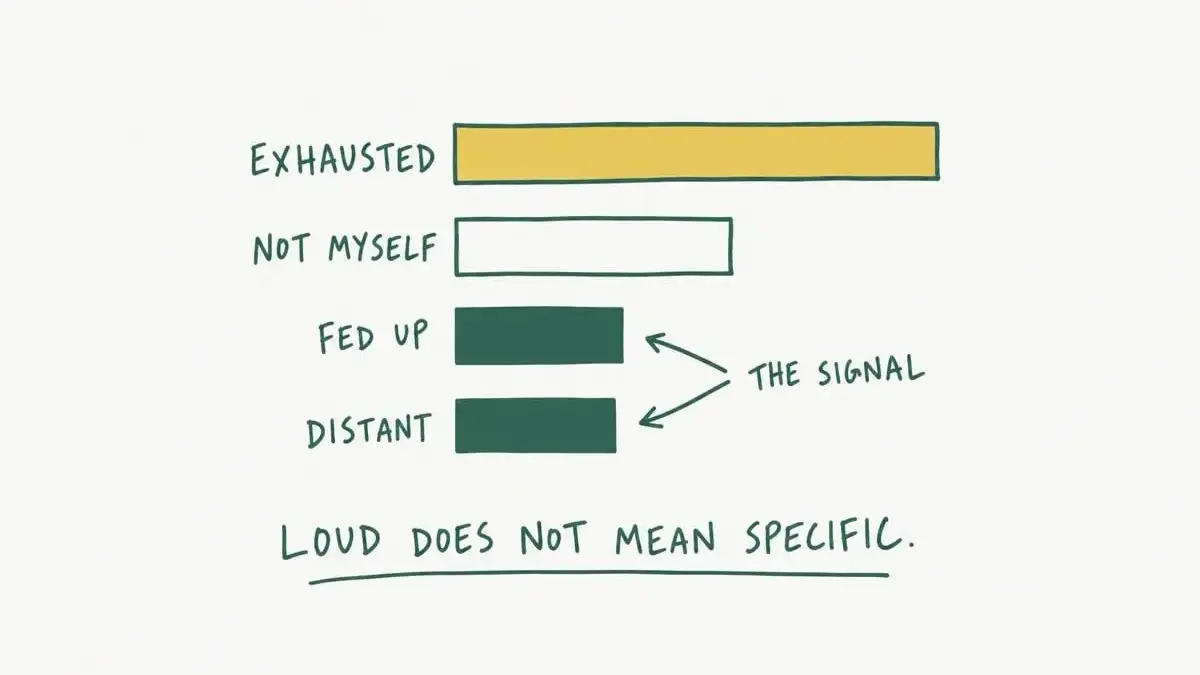
Researchers who study the mechanics of parental burnout measure the condition across four distinct dimensions: exhaustion specifically tied to the parental role, a stark contrast with the kind of parent one used to be, a deep-seated feeling of being fed up with the responsibilities of the role, and emotional distancing from one’s own children. These four dimensions were initially identified by analyzing descriptions provided by burned-out parents and were subsequently tested across a sample of 901 participants.
In the context of an ordinary week, these dimensions manifest in subtle, pervasive ways. They appear as a heavy dread before school pickup, a mechanical and detached approach to bedtime routines, a remarkably short fuse over trivial matters, and a private, unsettling sense that the individual has somehow vanished from their own family dynamic.
While researchers utilize these measures to study the phenomenon, the criteria serve as a research framework rather than a clinical diagnosis. Furthermore, other underlying health issues can produce similar signs. Nevertheless, for working parents navigating immense daily pressure, these categories provide a much more accurate vocabulary than simply declaring, "I’m just tired."
Among these indicators, exhaustion remains the loudest symptom, yet it is paradoxically the least useful signal when attempting to diagnose the root cause. Nearly every major life event can produce exhaustion, including caring for a newborn, enduring a month of poor sleep, fighting off a viral illness, or managing a high-pressure quarter at a professional job. Within empirical models of parental burnout, exhaustion sits alongside three other dimensions rather than standing in for the entire condition. Consequently, a week characterized by severe tiredness and full-scale parental burnout can look virtually identical to an outside observer.
When trying to evaluate the source of deep fatigue or distress, focusing exclusively on exhaustion can lead to misdiagnosis. Experts suggest examining three specific criteria instead. First, the duration of the feeling matters significantly; a rough couple of weeks following a major house move is temporary, whereas four months of persistent emotional flatness constitutes a clear pattern. Second, it is vital to observe whether the sensation lifts when immediate demands drop. Ordinary depletion typically responds to a quiet weekend or adequate rest, whereas persistent Sunday night dread regardless of a restful Saturday indicates a systemic load issue. Finally, determining whether the flatness is specific to parenting or permeates every area of life provides crucial context.
Emotional distancing represents perhaps the most harrowing symptom because it is the one parents almost never articulate out loud. This dimension involves the physical continuation of caretaking while internal interest and emotional engagement steadily thin out. A parent may continue to diligently pack school bags and sign administrative forms while catching themselves silently waiting for a child to finish a story simply so the room can remain quiet.
Parents rarely volunteer this information during casual conversations because verbalizing the sensation often feels akin to admitting a failure of love. Yet, within the empirical models, emotional distancing is one of the core dimensions and is the least likely to be explained by an ordinary rough week.

This silence surrounding emotional distancing creates significant risks. In a study involving 1,003 participants, parental burnout emerged as one of the strongest statistical correlates of child maltreatment, ranking alongside borderline personality features. Researchers emphasize that this association represents a measurement captured at a single point in time rather than definitive proof that burnout directly causes harm. Additionally, literature on the subject frequently reports high rates of escape ideation—the persistent wish to physically get away from one’s own family—among parents scoring high on burnout indices.
Mental health advocates stress that these findings should be interpreted as an urgent signal to seek early support rather than as a permanent verdict on an individual’s character or capability. Distancing is fundamentally a load signal. Because shame keeps it hidden, the condition is allowed to worsen in isolation. For parents experiencing distress regarding how they are treating their children, or those seeking immediate guidance before a difficult moment repeats, the Childhelp National Child Abuse Hotline provides confidential support via phone and text, alongside online chat services.
Understanding parental burnout also requires distinguishing it from professional burnout and clinical depression. Across a combined sample of 3,482 individuals, data measuring parental burnout, job burnout, and depressive symptoms loaded onto entirely separate statistical factors, supporting the view that they are three distinct phenomena. While distinct, they frequently overlap and share consequences, meaning a parent can experience more than one simultaneously.
This distinction carries critical practical implications for intervention. If the primary load resting on an individual is rooted in parenting, taking a week off from professional duties will not alleviate the underlying pressure. Working parents frequently misinterpret these signals in both directions. Some treat a parenting collapse as a purely professional problem, successfully negotiating a lighter quarter at the office only to find that the 5:30 p.m. dread remains entirely unchanged. Others treat a professional collapse as a personal parenting failure, compounding their schedule-related stress with unwarranted guilt.
Clinical experts note that if emotional flatness lifts the moment an individual is separated from their children and returns abruptly at the start of the workweek, the core issue likely lies in workplace strain. Conversely, when the distress is anchored primarily in the domestic sphere, different strategies are required. Furthermore, when generalized low mood, hopelessness, or a loss of interest pervades every aspect of life, clinicians advise seeking a professional psychological evaluation rather than relying on generalized burnout terminology. Caregiving responsibilities for aging relatives occupy a similarly related but distinct category, carrying their own unique structural loads and specialized vocabulary.
Theoretical frameworks often explain parental burnout as a chronic imbalance between parenting risks—the stress-enhancing factors of domestic life—and available resources—the stress-alleviating mechanisms. When this imbalance persists for a sustained period, the four core symptoms begin to emerge. For working parents, the utility of this model lies in the fact that both risks and resources can be actively counted and intentionally modified.
Risks tend to accumulate quietly over time. A child’s new individualized education program meetings, a partner transitioning to an earlier shift at work, an extended daily commute, or self-imposed domestic standards—such as preparing elaborate homemade meals every single night—gradually compound. Individually, none of these factors announce themselves as the breaking point, but collectively they overwhelm domestic capacity.
Resources, by contrast, are fundamentally concrete, usually measured in hours and people. Covered hours where another individual assumes full responsibility, paid assistance, uninterrupted sleep, a flexible professional environment, or a resilient social support network constitute true resources. Many problems categorized broadly as work-life balance issues are, at their core, resource-counting problems.
Data from a global study encompassing 17,409 parents across 42 countries revealed that the prevalence of parental burnout hovers around 5% overall, rising to approximately 9% in Western samples. Higher national rates of individualism correlated moderately with increased reports of parental burnout, suggesting that environmental and cultural pressures play a substantial role. This statistical context underscores why standard advice encouraging parents to simply "try harder at home" routinely fails.
To address these imbalances, many parents utilize structured domestic inventories to audit their daily lives. By systematically evaluating their current parenting risks alongside their tangible resources, individuals can identify specific demands to eliminate or delegate. Establishing dedicated blocks of recovery time supported by another capable adult allows the nervous system a chance to recalibrate.
However, researchers caution that while the academic literature surrounding the definition and measurement of parental burnout is robust, empirical data regarding definitive cures remains in early stages. Evaluations of cognitive behavioral stress-management programs show promising results, yet researchers emphasize that widespread, standardized recovery protocols are still developing.
Experts advise against seeking immediate, miraculous transformations. Instead, progress typically begins with small, deliberate adjustments to the daily balance of risks and resources. Whether dealing with professional exhaustion or domestic strain, individuals are encouraged to engage openly with the other adults in their lives to redistribute caretaking loads. When symptoms persist despite structural changes, or when deeper depressive features are suspected, consulting a qualified mental health clinician remains the most reliable path forward.



Leave a Reply