
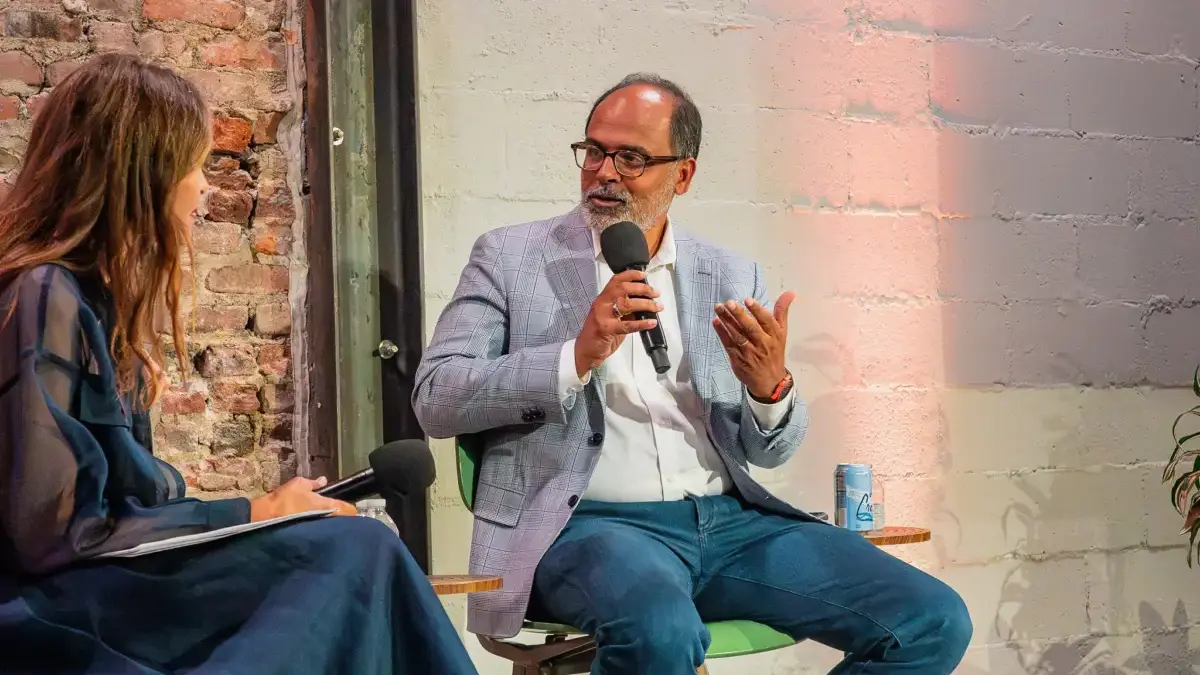
For 26 years, Deven Parekh has helped steer Insight Partners into the upper echelon of global investment firms. While the venture capital landscape is increasingly populated by loud voices dominating social media platforms and recording endless podcast episodes, Parekh and his team have largely preferred to operate behind the scenes. Managing a staggering $90 billion in assets under management, the heavyweight software and technology investor relies on portfolio performance rather than self-promotion to make its mark on the industry.
During a candid sit-down interview with TechCrunch at the StrictlyVC event in New York, Parekh offered a rare window into the inner workings of the firm. He discussed Insight’s high-profile wins—including multi-round investments in Databricks and lucrative stakes in generative AI pioneers OpenAI and Anthropic—alongside the deals it missed, such as buzzy legal-tech startup Legora. He also addressed the inherent conflicts of interest in modern venture investing, the dangers of market concentration, and why Insight maintains a diversified strategy even as peers chase the latest frontier AI labs.
Weighing AI’s Promise Against Existential Risk
The conversation quickly turned to the intense debate surrounding artificial intelligence safety. The industry has been gripped by controversy following the departure of an Anthropic researcher who warned publicly against the dangers of self-improving, autonomous AI systems. When asked whether these concerns amount to hysteria or represent legitimate threats, Parekh acknowledged the complexity of the landscape while coming down firmly on the side of optimism.
Comparing notes with fellow tech investor Keith Rabois, Parekh noted a shared perspective despite their political differences. While conceding that there is a non-zero risk of a non-state actor weaponizing an open-source model to develop biological threats, Parekh argued that the probability is vastly outweighed by the massive potential for medical breakthroughs. He pointed to a dramatic reduction in the time required to develop new drugs and cure complex diseases as a trade-off well worth making.
Drawing from his experience serving on the board of NYU Langone, Parekh highlighted how advanced data analytics and AI are already transforming patient care. By evaluating tens of millions of historical patient records, systems can identify subtle indicators that give clinicians advanced warnings of severe medical events, such as heart attacks, long before symptoms present themselves. Given an aging global population and a critical shortage of medical professionals, Parekh emphasized that scaling healthcare through technology is not merely an option, but a societal necessity.
The Philosophy of Quiet Scale and Diversification
With $90 billion under management, Insight Partners maintains a notably reserved public profile compared to peers of a similar scale. Parekh attributed this restraint to a distaste for the current trend of venture capitalists attempting to act as universal authorities on everything from epidemiology to global geopolitics.
Instead, Insight’s strategy centers on letting the portfolio drive the narrative. The firm believes that while communication is necessary for brand recognition, long-term success is ultimately measured by underlying asset performance and founder support rather than public commentary.
When examining the firm’s deployment strategy across early-stage investments, growth rounds, buyouts, and secondary transactions, Parekh explained that Insight does not adhere to fixed geographic or stage-based allocations. Instead, the approach adapts fluidly to macroeconomic conditions.
With high interest rates, tight debt markets, and compressed exit multiples dampening the software buyout market, Insight has avoided major buyout transactions since 2024. Meanwhile, venture valuations have begun climbing at a pace reminiscent of the frothy market conditions of 2021—an era that ultimately ended in a severe correction.
In a traditional market, subsequent funding rounds offer incremental data that justify higher valuations by reducing overall investment risk. In today’s fast-moving AI environment, however, rounds close so rapidly that investors often pay inflated prices without any corresponding reduction in risk. Parekh noted that the logical response to this dynamic is to move earlier in the funding lifecycle.
By utilizing a scale fund to write smaller initial checks—ranging from $20 million to $25 million rather than committing hundreds of millions upfront—Insight can identify winners and double down aggressively later. This exact playbook fueled massive returns in cybersecurity powerhouse Wiz, where an initial Series A check was followed by continued capital deployments that significantly outperformed a one-and-done strategy, all while keeping downside risk manageable relative to the fund’s massive capital base.
Navigating Global Talent and Missed Deals
Geographically, Parekh observed that top-tier talent has become increasingly distributed across the globe, though specific verticals still exhibit strong regional clustering. For instance, while AI infrastructure talent remains heavily concentrated in the San Francisco Bay Area—prompting Parekh’s own son to relocate to the region—other sectors display vastly different footprints. Financial technology talent, exemplified by companies like Ramp, remains anchored in New York, proving that vertical AI investments can thrive across diverse geographic hubs.
This global dispersion means missing out on competitive deals is an inevitable part of the business. Discussing Insight’s failure to secure a stake in the Stockholm-based legal-tech firm Legora—a deal that ultimately went to General Catalyst despite a personal pitch flight by partner Jeff Horing—Parekh maintained a pragmatic outlook. While acknowledging that competitors simply executed a superior value proposition in that instance, he emphasized that the global tech ecosystem is vast enough that no single firm needs to win every opportunity.
The Reality of Competing Portfolio Companies
The conversation also tackled one of the traditional taboos of venture capital: investing in direct competitors. Insight’s dual investments in generative AI giants OpenAI and Anthropic sparked considerable discussion internally, though the debate focused primarily on whether the firm should have entered earlier rounds rather than the ethical implications of holding stakes in rival operations.
Parekh explained that investment decisions of this magnitude are heavily stage-dependent. Early-stage investors leading a Series A round, such as Khosla Ventures with OpenAI, face severe governance and information-sharing constraints that naturally preclude backing a direct competitor. However, at later stages—when an investor is off the board, not driving governance, and simply buying into a massive market position—the dynamic shifts.
Insight viewed OpenAI as the dominant consumer play and Anthropic as carving out a clear enterprise strategy, though those lines continue to evolve. As capital requirements for these foundational models ballooned into tens of billions of dollars, exclusivity demands became unsustainable. Nevertheless, at earlier funding stages, Insight maintains strict information-sharing barriers and avoids backing directly competing firms, mindful of founder sensitivities around even minor market overlaps.
When asked about physical AI and robotics, Parekh adopted a cautious stance, characterizing most current physical intelligence ventures as sophisticated science projects. While acknowledging their eventual commercial viability, he noted that investing in the space requires making dual assumptions about both the feasibility and the timing of mass robotics adoption—a timeline Insight is content to watch unfold from the sidelines for now.
Concentration Risk and the Imperative of Liquidity
Addressing the broader venture capital landscape, Parekh expressed concern over the extreme concentration of capital flowing into a handful of AI giants. While OpenAI and Anthropic absorbed roughly half of all venture dollars during the first half of the year, Parekh warned against the perils of over-concentration. Pointing to emerging funds pitching LPs on dedicating up to 40% of their capital to just one or two companies, he stressed that the venture business has historically rewarded long-term diversification.
Liquidity remains a central tenet of Insight’s operational philosophy. Noting that many first- and second-time fund managers have struggled to return capital to limited partners, Parekh emphasized that turning paper gains into realized cash is the fundamental job of an institutional investor.
Over the past two years, Insight has returned more than $20 billion to its limited partners through strategic exits and initial public offerings, with additional distributions on the horizon. Even as multi-billion-dollar growth funds become commonplace, Parekh believes that maintaining a healthy Distribution to Paid-In Capital ratio remains essential for long-term survival across successive fund generations.
As upcoming public market debuts for giants like Anthropic and OpenAI loom on the horizon, Parekh expects the broader market to absorb the activity smoothly, much as it did with SpaceX. However, he cautioned that the breathtaking growth rates that define today’s generational tech companies cannot scale indefinitely. Eventually, even these dominant market leaders will transition into steady, mature enterprises, underscoring the enduring need for public markets to provide sustainable liquidity and validate the true value of the technology sector.



Leave a Reply