
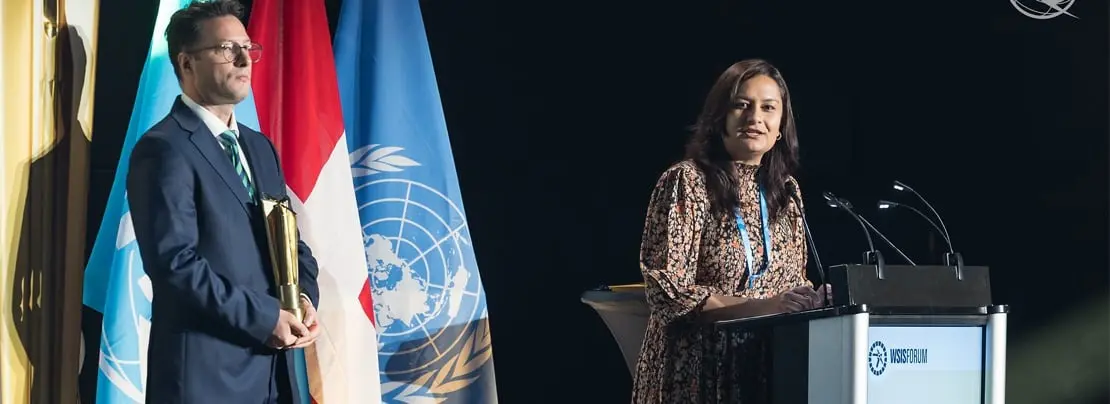
The World Summit on the Information Society (WSIS) Forum 2026, co-hosted in Geneva by the International Telecommunication Union (ITU) and Switzerland, brought together global leaders, technical experts, civil society representatives, and industry stakeholders from July 6 to July 10. Held alongside the prominent AI for Good Summit and the inaugural Global Dialogue on AI Governance, this year’s gathering served as a critical milestone. As the first major WSIS Forum since the formal completion of the WSIS+20 Review in 2025, the event marked the definitive beginning of a new phase for the international digital development agenda.
While discussions across the multi-day conference covered a broad array of pressing digital policy issues—including artificial intelligence, cybersecurity, and infrastructure development—one central theme dominated the agenda throughout the week: a decisive shift away from merely documenting commitments and toward demonstrating measurable, real-world implementation.
Following the conclusion of the WSIS+20 Review, the international community officially reaffirmed its enduring commitment to the overarching WSIS framework through to 2035. Across numerous sessions and plenary meetings, speakers repeatedly highlighted the ongoing, irreplaceable value of the multistakeholder model. This collaborative approach ensures that governments, the technical community, civil society, academia, and private industry all contribute meaningfully to global digital development outcomes.
The WSIS+20 outcome document, which was formally adopted in December 2025, provides the strategic roadmap for this next decade of work. Among its most critical directives was a formal request for all WSIS Action Line facilitators to develop results-oriented implementation roadmaps that are closely aligned with relevant Sustainable Development Goals (SDGs) and the commitments outlined in the Global Digital Compact (GDC).
This mandate represents a profound evolution in how international digital governance operates. For much of the past two decades, the WSIS process has naturally focused on documenting activities, forging partnerships, and establishing high-level policy commitments. However, the international community is now pivoting firmly toward concrete targets, robust indicators, and measurable metrics capable of demonstrating tangible real-world outcomes.
Building Implementation Roadmaps
A recurring challenge highlighted during the Geneva Forum was the historical difficulty of tracking, assessing, and evaluating WSIS-related activities across the complex architecture of the United Nations system and the wider stakeholder community.
To dramatically improve institutional visibility and cross-sector coordination, various United Nations agencies are currently developing a consolidated resource platform. This centralized tool will bring together comprehensive information regarding WSIS Action Lines, identifying responsible agencies, active programs, specific outputs, and individual stakeholder contributions. This upcoming platform is expected to reflect a growing institutional emphasis on accountability, transparency, and tighter operational coordination.
The UN Commission on Science and Technology for Development (CSTD), the body responsible for overseeing annual WSIS implementation reviews, emphasized that future reporting cycles must pivot sharply toward rigorous evaluation metrics. This new direction seeks to replace vague progress summaries with data-driven insights into how digital policies genuinely affect societies on the ground.
Developing these comprehensive implementation roadmaps, however, is not without its challenges. Certain Action Lines—such as Action Line C1, which focuses on "the role of governments and all stakeholders in the promotion of ICTs for development"—are inherently broad and historically difficult to operationalize effectively. To overcome this hurdle, several speakers at the WSIS Forum suggested breaking down these sweeping commitments into smaller, highly focused workstreams backed by tailored implementation plans and specific metrics.
Action Line facilitators have been tasked with completing their respective roadmaps by 2027. This makes the coming year a critical window for shaping how broad WSIS political commitments are successfully translated into practical, on-the-ground actions.
From Representation to Participation
Multistakeholder participation remained a cornerstone of the discussions in Geneva, yet the dialogue increasingly emphasized the quality of engagement rather than merely ensuring that diverse stakeholder groups occupied seats at the table.
Speakers repeatedly stressed that effective international digital cooperation requires deep, active engagement at local and regional levels, extending far beyond participation in high-level global forums in major international hubs. Communities directly affected by digital policy decisions must be given meaningful, structured opportunities to contribute to the creation, deployment, and ongoing evaluation of those policies.
This conversation featured prominently in debates concerning the future evolution of the Internet Governance Forum (IGF). Participants consistently argued that any newly proposed mechanisms for enhanced government engagement must remain firmly integrated within the broader, inclusive multistakeholder model rather than splintering off into a separate, purely intergovernmental process.
Furthermore, the São Paulo Multistakeholder Guidelines, which were developed through the NetMundial+10 process, were frequently cited throughout the week as a highly practical framework for implementing core multistakeholder governance principles. Their formal recognition within the WSIS+20 outcome document was widely praised by attendees as a significant achievement for the global governance community.
What’s Next for the IGF?
The recent, hard-won security of a permanent mandate for the Internet Governance Forum served as another major topic of discussion in Geneva.
Despite ongoing conversations regarding the long-term evolution and optimization of the Forum, there was remarkably little appetite among delegates for sweeping structural reforms. Instead, participants overwhelmingly favored strengthening existing institutional mechanisms and concentrating energies on ensuring a highly successful global IGF meeting in Nairobi later in the year.
Many speakers singled out national, regional, subregional, and youth IGFs as standing among the model’s greatest operational achievements. At the same time, experts noted that stronger operational links must still be forged between these National and Regional Initiatives and the global IGF platform to ensure that grassroots experiences and local realities more effectively inform high-level global policy discussions. This year’s WSIS Forum placed a particularly heavy emphasis on the IGF, underscoring the deepening institutional connection between the two complementary global processes.
From Regional Success to Global Recognition
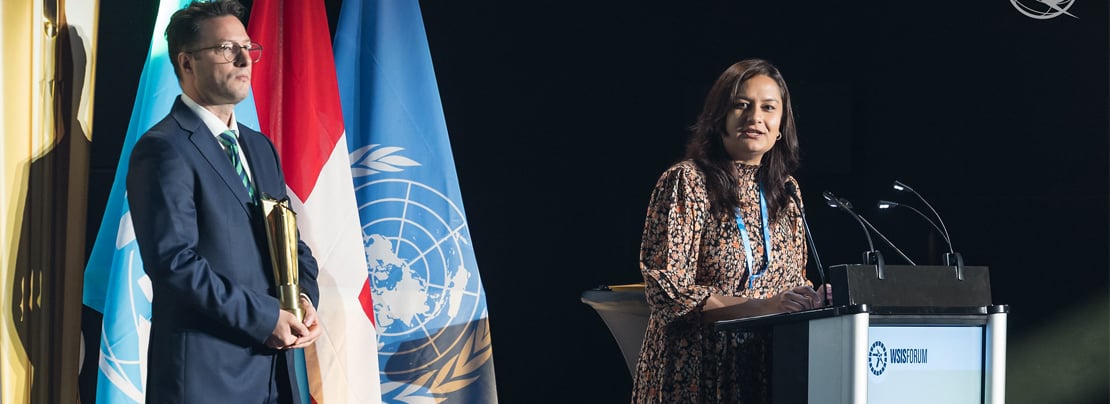
Amidst the high-level policy debates and institutional planning, one notable highlight of the week was the celebration of grassroots and regional excellence. The APNIC Foundation’s Building Capabilities in the Asia Pacific (BCAP) project was officially awarded the prestigious 2026 WSIS Prize in the Capacity Building category.
This international recognition demonstrated the profound value of practical, community-led initiatives that deliver tangible capacity-building outcomes and support sustainable digital development across diverse regions.
Looking Ahead
The WSIS Forum 2026 has clearly signaled the commencement of a demanding new implementation phase. The central challenge facing the global community is no longer simply defining policy commitments, but reliably demonstrating measurable results.
As detailed implementation roadmaps are finalized and rolled out over the next year, international attention will increasingly shift toward evidence-based reporting, transparent metrics, and collective accountability. Ultimately, the long-term success of this next chapter of the WSIS agenda will depend entirely on whether the global stakeholder community can successfully transform broad declarations into concrete actions that deliver meaningful, lasting impact at local, regional, and global levels.
If the first two decades of the World Summit on the Information Society were defined by the arduous task of building international consensus, the coming decade will likely be defined by the community’s collective ability to deliver on those promises.

Leave a Reply