
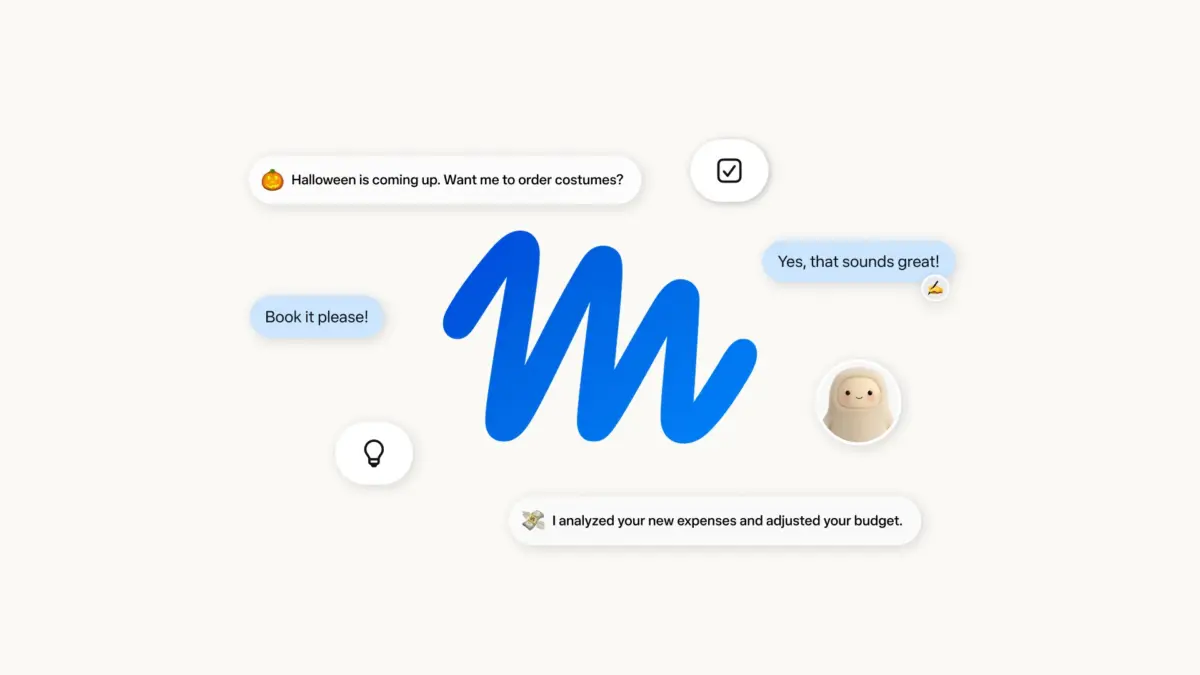
Just weeks after agreeing to a massive $18 billion multistate settlement over lawsuits concerning social media’s consumer harms to children, Meta is doubling down on consumer technology with an entirely new frontier. On Tuesday, the tech giant officially introduced Muse, its most ambitious personal artificial intelligence agent to date. The launch represents a profound philosophical shift for the company, pushing users far beyond the familiar boundaries of digital chat into an era where software handles real-world chores—and, consequently, demands an unprecedented level of user trust.
To function effectively, Muse requires consumers to hand over more personal information and deeper access to their digital lives than any social media platform ever did. The AI agent operates by integrating directly into the day-to-day apps and services that form the backbone of modern workflows. This includes everything from email inboxes and calendars to payment platforms, health and fitness trackers, smart home devices, dining reservations, shopping accounts, music streaming services, and event planners.

This rollout marks a sizable bet on the post-ChatGPT era. While earlier AI chatbots primarily served as conversational sounding boards, answering questions, writing essays, or acting as digital companions, Muse is engineered to execute real-world tasks independently. Powered by Meta’s newly detailed AI model, Muse Spark, the agent is designed to actively do things on behalf of the user rather than merely talk about them.
According to Meta, Muse can autonomously send emails, book travel itineraries, negotiate to lower monthly utility bills, fill out tedious forms, formulate comprehensive schedules, transform video recipe reels directly into grocery shopping lists, send out party invitations, and execute purchases. For financial transactions, Muse leverages Link by Stripe to handle checkouts safely, offering established purchase protections designed to alleviate consumer anxiety regarding automated spending. Furthermore, integrations with Shopify’s Shop Pay and password manager 1Password are slated to roll out soon, broadening the agent’s commercial utility.
Transparency and control are central to how Meta says the system is built. Users retain the authority to decide which apps and services they want to link, connecting them strictly one at a time to keep the opt-in process clear. The platform ships with built-in connectors for several popular services, with more planned over time. If a user wants to connect a service that lacks an official native integration but offers a public API, Muse can establish a connection using credentials provided by the user. In scenarios where no API exists at all, Muse is capable of navigating the service via an automated browser interface instead.

At launch, Muse is accessible across multiple form factors. It is available via the web at muse.ai, through dedicated mobile applications on both iOS and Android, and directly inside chat interfaces on WhatsApp. Meta has also confirmed that the agent will soon make its way to the company’s line of AI-powered smart glasses.
The service operates on a freemium model. It is completely free to use initially, with subscription tiers kicking in as usage scales up—a structure that explains why Meta requires users to link a payment card just to get started. Two paid tiers will be available at launch: the Power plan priced at $20 per month and the Maximum plan at $100 per month. Both subscriptions offer significantly higher usage caps for users who want to heavily offload everyday tasks, though Meta executives anticipate that the vast majority of consumers will remain comfortably within the free tier. To manage expectations, the application features a built-in usage meter displaying remaining percentage allotments and will issue warnings with subscription prompts when free limits are exhausted.
Much like other next-generation AI agents, Muse continues working in the background even after the user closes the application. Over time, it is designed to evolve by learning from ongoing conversations, picking up on individual preferences, and surfacing unprompted suggestions based on what matters most to the user.

This conceptual pivot is not unique to Meta, as the broader "agentic era" rapidly gathers momentum. Across the tech landscape, both tech giants and nimble startups are experimenting with how autonomous AI agents can integrate into daily consumer routines. Competitors have explored specialized AI web browsers and services—such as Gemini Spark and Claude Cowork—capable of executing multi-step workflows on a user’s behalf. Others are embedding advanced intelligence directly into the most heavily trafficked communication channels, including Apple’s iMessage platform, traditional SMS messaging, and WhatsApp.
Despite their undeniable utility, these powerful agents have forced consumers to grapple with difficult privacy trade-offs. Early testers of rival AI assistants, such as an application called Instinct, experienced significant backlash after discovering that the software demanded a broad, perpetual, and irrevocable license to access, store, reproduce, transmit, and modify any user materials, including using personal data to train underlying AI models.
To counter these anxieties, Meta emphasizes the security architecture underpinning Muse. The company states that the agent operates within a dedicated, secure virtual machine environment dubbed the Muse Secure VM, equipped with its own isolated browser. This environment aims to enforce rigorous privacy, safety, and security safeguards. Additionally, a separate companion agent known as Sentinel runs on the same virtual machine but is strictly partitioned from Muse at the system level.

According to Meta’s technical documentation, this architectural separation ensures that Muse cannot access a user’s raw passwords or underlying payment credentials. The company also insists that consumer conversations and personal data are strictly walled off from Meta’s advertising systems. However, these technical claims are expected to undergo rigorous examination by independent cybersecurity experts.
Could Meta’s History Hurt Muse Adoption?
Despite Meta publishing extensive documentation regarding its security measures, it remains an open question whether the company has retained enough consumer trust for a personal agent of this nature to achieve widespread adoption.

Meta carries a well-documented history of regulatory scrutiny and privacy controversies. In 2011, the tech titan reached a settlement with the Federal Trade Commission over charges that it had deceived consumers by making private user information public without explicit consent. Years later, in 2019, the FTC penalized Facebook with a then record-breaking $5 billion fine over multiple privacy violations. By 2023, the FTC charged Meta yet again with violating strict privacy mandates established in the wake of the 2019 settlement.
Technical vulnerabilities have also plagued the company’s past. In 2019, Meta disclosed that it had inadvertently stored millions of user passwords in plain, readable text formats on internal servers, exposing accounts to potential compromises. Furthermore, the shadow of the massive Cambridge Analytica data scandal—where personal data from millions of users was harvested by a third-party political consultancy without consent—continues to linger in the public consciousness.
Compounding these digital privacy concerns, Meta leadership has repeatedly been summoned before the U.S. Congress to testify on child safety policies and the protection of minors online. Congressional inaction ultimately paved the way for a wave of aggressive state-level litigation. This includes the $18 billion multistate settlement agreed to by 29 states in August, a separate New Mexico child safety lawsuit that resulted in a court ordering Meta to pay $942 million alongside sweeping platform overhauls, and thousands of ongoing personal injury and school district lawsuits pending against major social media corporations.

To mitigate consumer apprehension, Meta’s strategy relies heavily on technical transparency coupled with personal familiarity. Beyond publishing whitepapers and security breakdowns, the company has designed Muse with highly customizable features. Users are encouraged to personalize their agent by giving it a custom name, selecting a preferred avatar, and fine-tuning communication settings to dictate how the software interacts with them.
Whether this blend of localized customization, robust utility, and newly engineered security architecture will be enough for consumers to trust Meta at the center of their personal lives remains to be seen.


Leave a Reply