
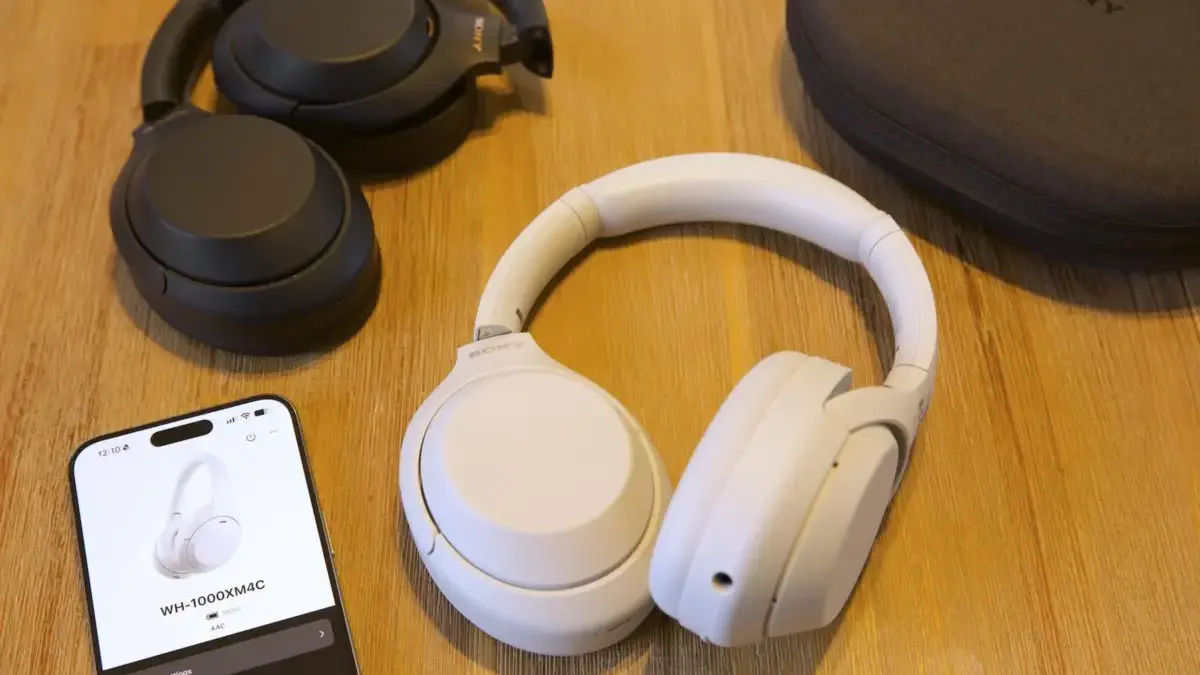
Six years ago, the consumer audio landscape was dominated by a fierce rivalry between Sony and Bose, with each successive generation of noise-canceling headphones raising the bar for acoustic performance, comfort, and battery endurance. Amid that competitive golden age, Sony unleashed the WH-1000XM4 headphones in the fall of 2020 to widespread critical acclaim. For years, those headphones comfortably occupied the top spot on countless "best headphones" roundups, winning over audiophiles and commuters alike with their rich sound profile, highly competitive active noise cancellation, and remarkably compact, foldable design.
Even after they eventually went out of stock and made way for newer iterations, their legacy lingered. Now, in an unexpected move, Sony has brought the iconic design back with minor internal and external refinements, relaunching them as the WH-1000XM4C.

From a purely aesthetic standpoint, the XM4C look virtually identical to the original XM4 models that captivated the market half a decade ago. They retain the familiar hinge design and the practical ability to fold up neatly into a tight package for easy transport. This compact form factor is particularly notable because Sony briefly moved away from it when introducing the WH-1000XM5 in 2022, opting instead for a non-folding, pivoting ear cup design. While Sony later returned to a folding mechanism—though not quite as compact as the original—with last year’s WH-1000XM6, the resurgence of the XM4 design proves that portability remains a high priority for many listeners.
Beyond the physical shell, the XM4C also echo their predecessors beneath the surface, utilizing the same QN1 processing chip and a four-microphone array to drive active noise cancellation. By modern standards, this hardware architecture is undeniably showing its age. The subsequent XM5 headphones also relied on the QN1 processor but expanded the microphone count to eight, while last year’s flagship XM6 stepped up significantly with 12 microphones paired with the brand-new QN3 chip.
Despite keeping the older silicon and mic layout, Sony did implement meaningful updates to bring the XM4C’s acoustic capabilities in line with its current lineup. The new headphones feature an updated sound profile designed to satisfy modern listening preferences. Furthermore, users now get a comprehensive 10-band equalizer accessible via the official Headphones app, a substantial upgrade over the 5-band EQ found on the original XM4. The app also introduces a dedicated gaming preset, expanding the versatility of the headphones for multimedia enthusiasts.

Connectivity has also received a modern bump, with the XM4C supporting Bluetooth 6 instead of the older Bluetooth 5 standard found on the 2020 version. Curiously, however, battery performance on the newly revived model takes a slight step backward. Sony estimates that the XM4C can deliver up to 27 hours of continuous playback with active noise cancellation enabled, which is three hours shy of the 30-hour rating boasted by the original XM4. While this reduction is unlikely to deter travelers—27 hours remains more than enough juice to comfortably survive a grueling cross-country flight—it remains an unusual regression for a refreshed product.
When they hit store shelves later this fall, the XM4C will retail for $300. That price point places them $50 cheaper than what the original XM4 cost when they first launched in 2020, and a full $100 cheaper than the current retail price of the flagship XM6. Even so, $300 is notably higher than the discounted clearance prices the original XM4 commanded just before they were officially discontinued by the manufacturer.
For long-time fans of the brand, the return of the XM4 form factor stirs up plenty of nostalgia. Review units have already begun landing on desks across the tech journalism sphere, prompting industry watchers to dig deeper into the strategy behind Sony’s decision. Over the past six years, the broader headphones market has evolved at a rapid pace, incorporating advanced spatial audio, vastly superior noise suppression algorithms, and more efficient power management. It remains an open question whether there is truly a persistent demand to turn back the clock. After all, the XM5—despite its inability to fold down quite as neatly as the XM4C—stands as an exceptionally capable pair of headphones, and can frequently be found discounted to around $200, though that aggressive pricing may simply be an effort by retailers to clear out remaining inventory ahead of the new release.

Alongside the surprising resurrection of the XM4 line, Sony is also refreshing the next generation of its more accessible midrange and entry-level headphone portfolios with the introduction of the WH-CH730N and WH-CH530. Both of these new lower-cost models inherit the same software upgrades as their high-end sibling, including the versatile 10-band EQ and the specialized gaming EQ preset. In addition, the over-ear WH-CH730N has been redesigned to fold up into a much more compact form factor, addressing a common user request for easier daily portability in the budget-friendly category.
Battery longevity for these affordable models has likewise seen a notable boost according to manufacturer specifications. The ANC-equipped WH-CH730N is rated for up to 50 hours of playback with noise cancellation turned on, while the non-ANC WH-CH530 stretches that endurance even further to an impressive 55 hours.
The accompanying mobile companion app also introduces a helpful new safe listening mode, allowing users to establish a hard cap on the maximum volume output of the headphones. While this addition will likely be welcomed by parents seeking ways to safeguard their children’s hearing over extended listening sessions, the feature does come with a notable limitation: there is currently no way to lock the volume ceiling with a passcode once it has been established, meaning clever users can easily reverse the setting.

The budget-friendly WH-CH530 is available immediately in a wide array of vibrant colors, including black, cobalt, mint green, white, pink, and coral, with a price tag of $70. Meanwhile, the step-up WH-CH730N is available now for $180, offered in black, blue, oat, white, and pink colorways.
Rounding out Sony’s busy hardware announcements is a high-profile lifestyle partnership with Sanrio centered around Hello Kitty. This limited-edition collaboration features special bundles encompassing either the premium WH-1000XM6 or the midrange WH-CH730N and WH-CH530 models, which will be offered in sleek black or signature pink color options. Each bundle includes a custom Hello Kitty-shaped carrying pouch and a matching Hello Kitty-branded bag. True to collector items of this nature, these themed bundles will be produced in limited quantities and sold exclusively through Sony’s official website later this year.



Leave a Reply